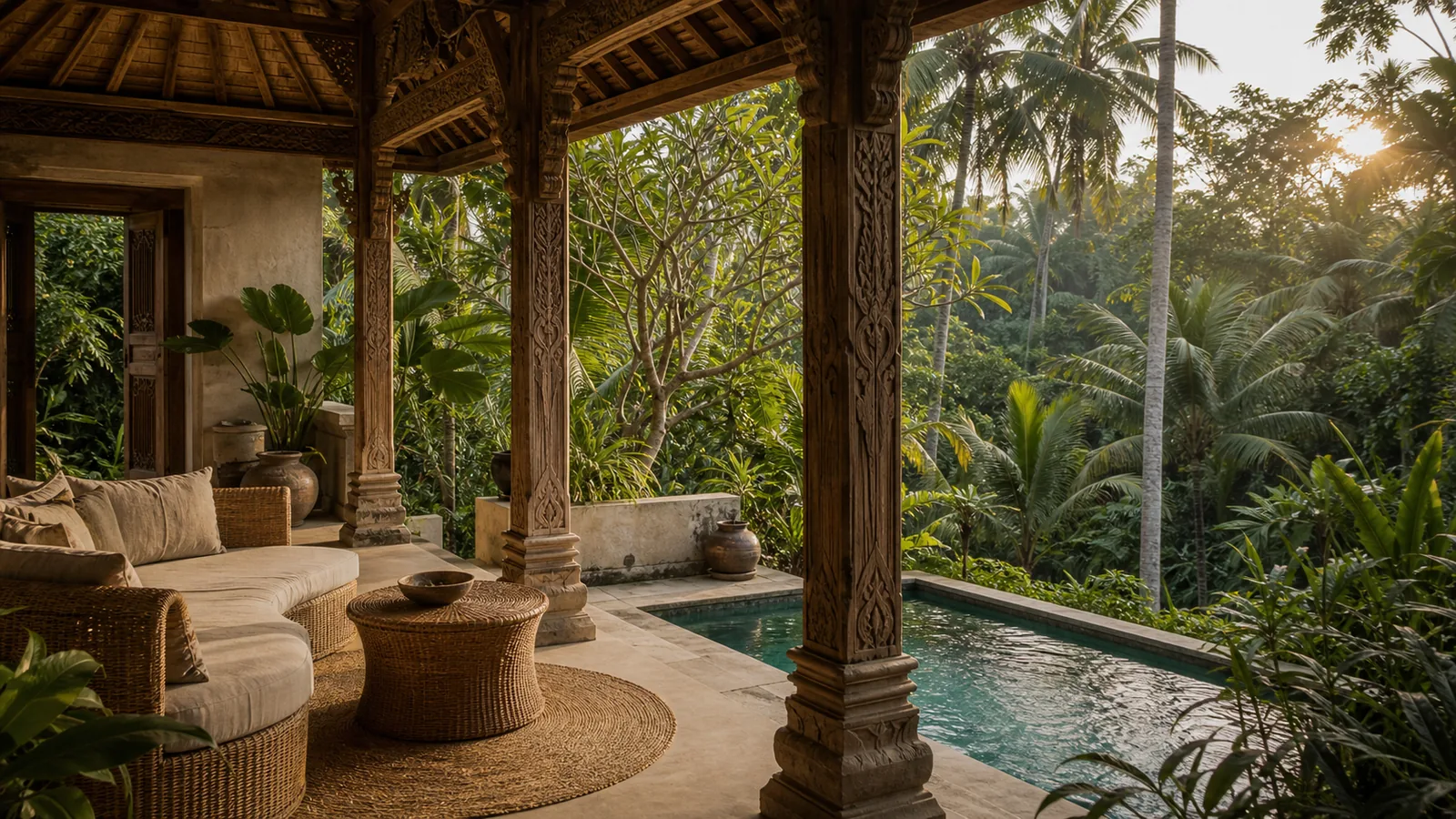
Ubud Yoga Retreat Property: Five Things to Verify Before You Book a Viewing
The buyer decision is not whether Ubud feels right — it almost always does. The decision is whether a specific ubud yoga retreat property can actually support your retreat concept once you look past the listing photos: whether the shala is sized and oriented correctly, whether the access lane handles a twelve-person group transfer, whether the permit stack covers what you plan to do there, and whether the lease term is long enough to recover fit-out costs and still exit with options.
This guide helps you answer those questions before you spend time on viewings, deposits, or due diligence fees. It is written for buyers comparing sites in the Ubud area. It does not list inventory or project yields. It gives you a verification framework to qualify sites on criteria that agent listings rarely cover.
A note on what this page is. We are a buyer-side research desk, not a selling agent. We do not represent vendors or earn commissions on sales. Legal analysis here is educational context — not legal advice — and any ownership or permit question should be confirmed with a qualified Indonesian notary or legal practitioner. ROI figures cited are published industry estimates, not operator promises or contractual yield promises.
What Most Guides Miss
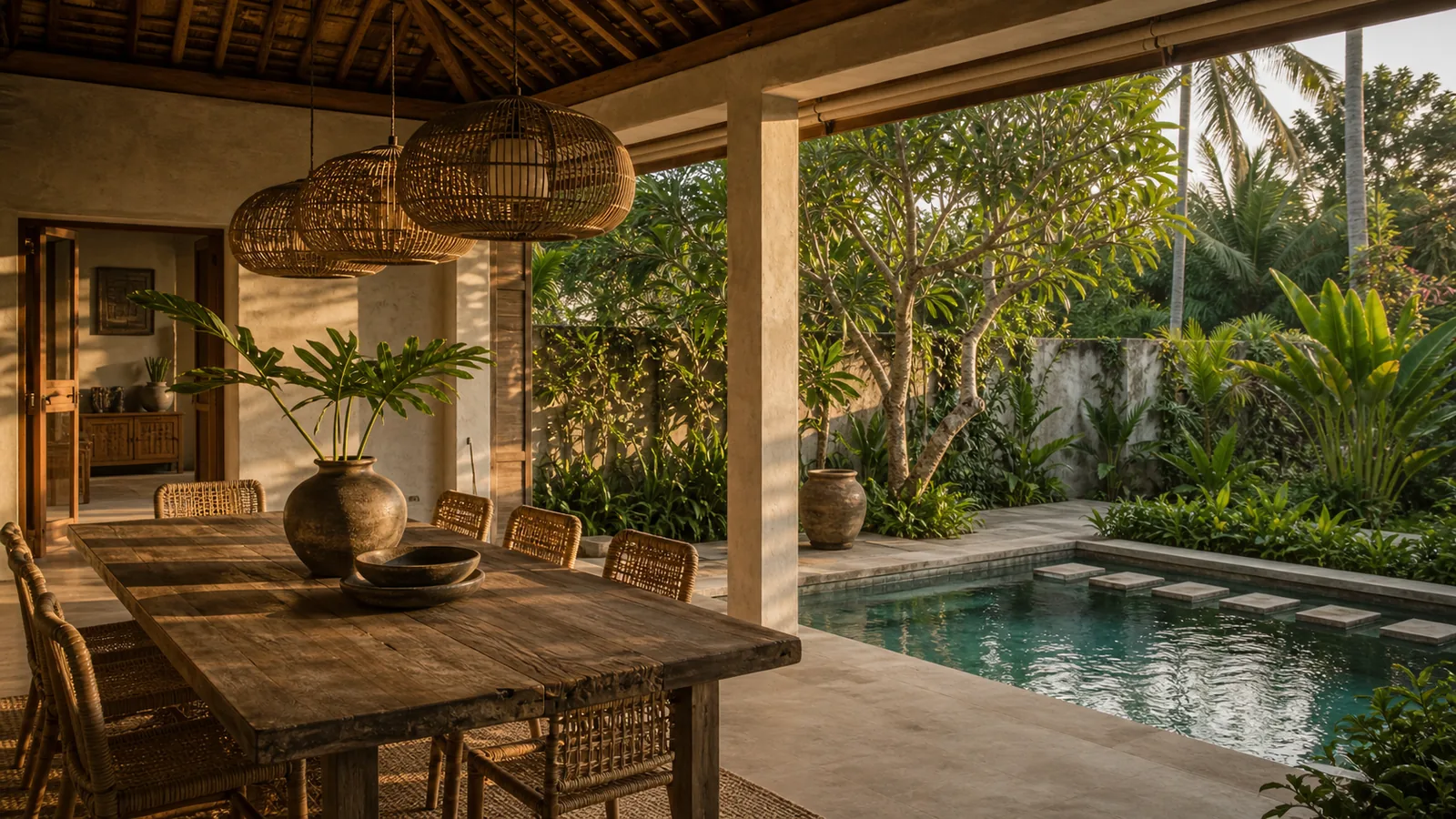
Most Ubud property content leads with atmosphere: jungle canopy, spiritual energy, the wellness culture that genuinely does exist here. None of that is inaccurate. But atmosphere is the last thing a buyer with capital at risk should evaluate first.
Here is what tends to disappear from the standard Ubud property article:
Retreat-use licensing is not the same as villa rental licensing. A standard short-term rental permit does not automatically authorise group programming, paid yoga sessions, spa treatments, or food service for non-overnight guests. Rules vary by village (banjar) and sub-district. The Bali villa rental license overview explains the licensing layer before you build yield assumptions on top of it.
Access scales differently for retreats than for private villas. A narrow lane that suits two guests on holiday becomes an operational constraint when you are coordinating a twelve-person group transfer, a food supplier delivery, and three staff motorbikes arriving before 7am.
The shala is the revenue asset, not the bedroom count. Most listing portals describe bedrooms and pools. A viable yoga retreat operation depends on shala floor area, orientation, ventilation, acoustic separation, and group capacity — criteria that rarely appear in agent descriptions.
Lease decay and retreat ROI interact in ways buyers underestimate. A 25-year leasehold priced on retreat-use assumptions looks meaningfully different in year 18, when resale liquidity shrinks, the structure requires significant capital maintenance, and a prospective buyer must justify the remaining term to another investor.
Location Fit: Is an Ubud Yoga Retreat Property Right for Your Model?
Ubud has genuine structural advantages for retreat operations: an established international wellness visitor base, a resident community of teachers and practitioners, and a supplier network — kitchen staff, massage therapists, sound healers, ceremony facilitators — that does not exist at comparable depth elsewhere in Bali.
The constraints are equally structural, and worth naming directly.
Road access and vehicle logistics. Ubud’s interior is cut by narrow, sometimes steep lanes. Properties marketed for seclusion often sit at the end of access roads that require negotiation for a single car and become impassable for a minibus in wet season. For a retreat moving guests, supplies, and staff daily, this is an operating cost, not an aesthetic feature.
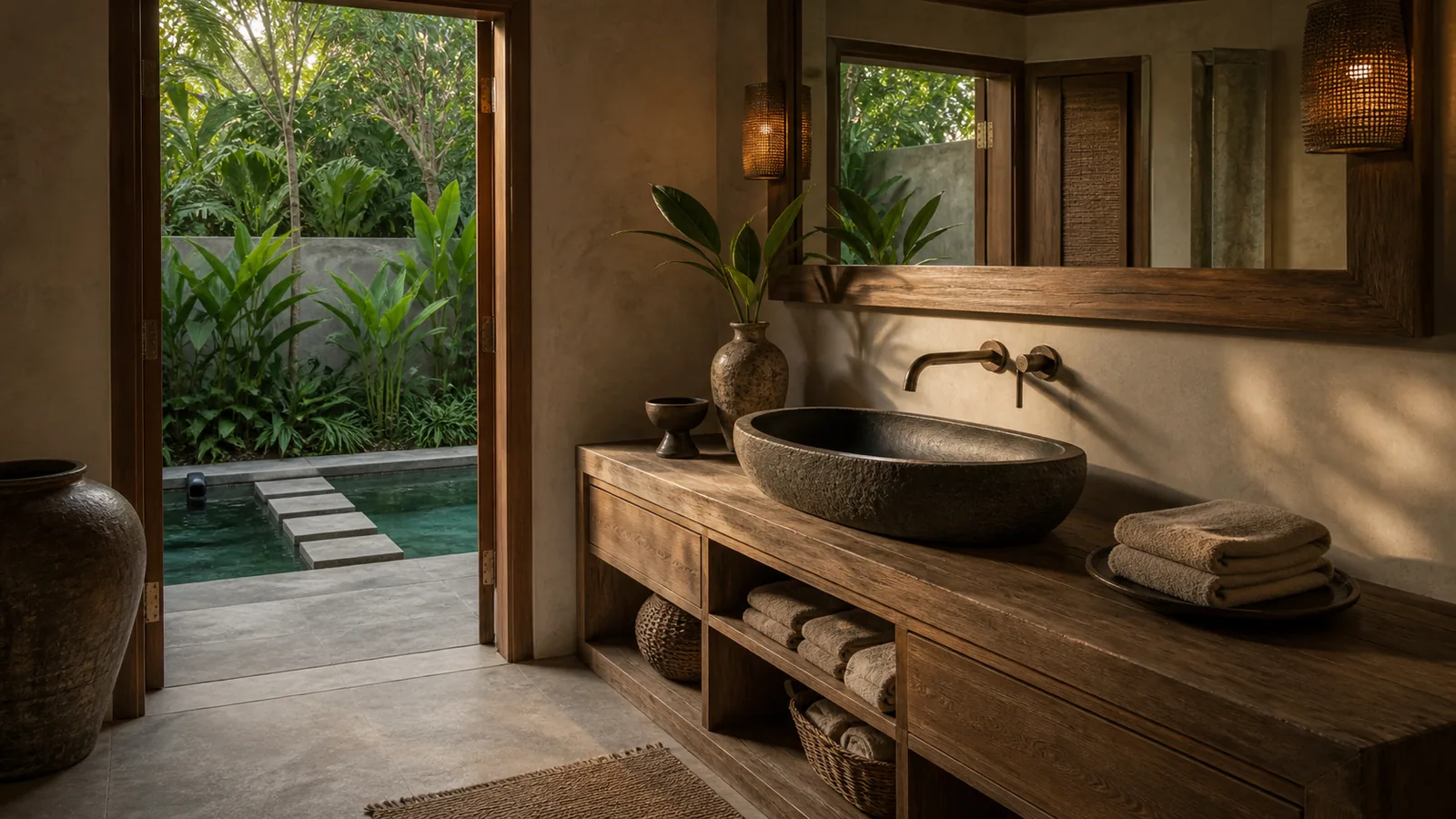
Humidity and material maintenance. Ubud sits at higher elevation with heavier annual rainfall than coastal Bali. Teak shalas, bamboo structures, natural stone, and open-sided buildings all require more intensive maintenance cycles. Budgeting 8–12% of property value annually for a timber-heavy Ubud property is more realistic than coastal assumptions, according to practitioners in the villa audit sector (villaaudit.com).
Noise and neighbourhood exposure. Ubud’s popularity is accelerating land conversion. A property commanding a seclusion premium today may be flanked by a homestay or construction project within five years. Walk the neighbouring lots and ask what is planned — or check with the local village office (kantor desa).
Seasonality and long-stay demand patterns. Retreat and long-stay bookings in Ubud are more sensitive to global travel trends than coastal short-stay. Occupancy figures presented as annual averages deserve breakdown by month and by year. Bali Tecture’s villa income research notes that Ubud properties show stronger seasonality variance than Seminyak comparables — a factor that directly affects the operating assumptions behind any yield modelling.
For properties already filtered for access and retreat-use fit, see Ubud wellness retreat villas.
Group Retreat Operations: What the Site Must Support
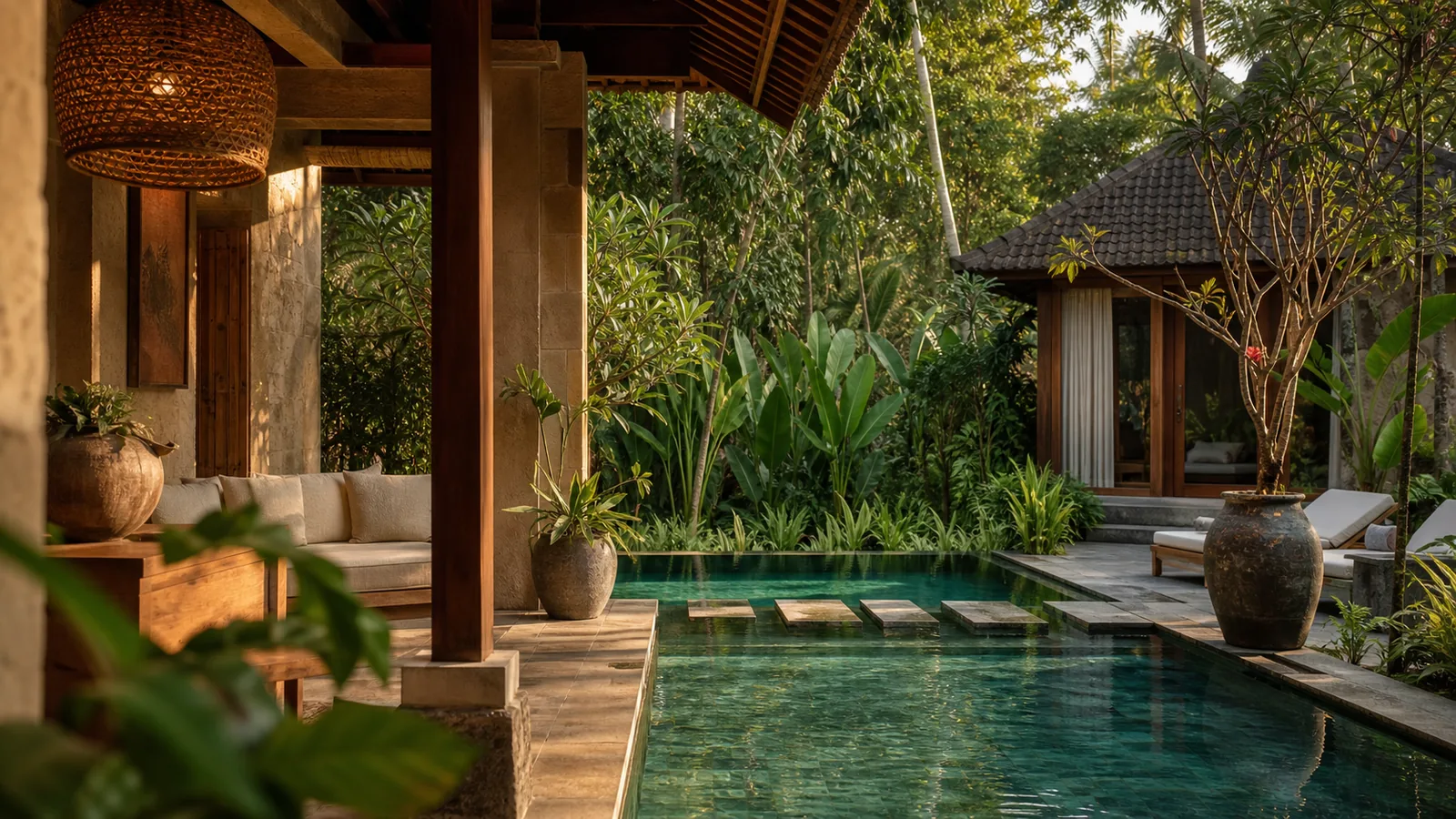
The table below compares what a private villa use case requires against what a commercial group retreat actually needs. Gaps between the two are where buyer assumptions most often break down.
| Operational element | Private villa use | Group retreat (8–14 guests) |
|---|---|---|
| Shala floor area | Any | 40 m² minimum for 10 mats with spacing |
| Bathroom ratio | 1 per bedroom | ~1 per 2 guests operational minimum |
| Kitchen permit | Residential or villa | Food service permit for non-residents |
| Parking / turnaround | 1–2 cars | Van access + staff motorbike space |
| Staff quarters | Not required | Preferred for early/late shift coverage |
| Noise buffer | Desirable | Essential for dawn and evening practice |
| Treatment rooms | Optional | Required for spa revenue stream |
| Retreat-use license | Not applicable | Separate from villa rental permit |
Infrastructure requirements drawn from Bali Real Estate Consultants retreat listings and standard due diligence frameworks in the villa sector.
Yoga-Shala Readiness Checklist
Use this during or before a site visit. A property that cannot satisfy most of these points should be repriced as a private villa, not evaluated on retreat-use assumptions.
- Shala orientation verified — east or north-facing avoids peak afternoon glare during practice
- Floor dimensions measured, not estimated from photos — confirm actual mat capacity
- Floor surface assessed: polished concrete, timber, and bamboo each carry different slip, maintenance, and comfort implications
- Ventilation confirmed: open-sided structures need rain-drift protection; enclosed shalas need through-flow to avoid heat build-up
- Acoustic separation tested: kitchen, road, and neighbouring noise audible during a simulated 7am practice slot?
- Rain exposure assessed: does the shala structure protect a full class during a heavy Ubud downpour?
- Drainage below slab or deck confirmed — Ubud’s rainfall is high and pooling damages floor material over time
- Equipment storage: lockable, dry space for mats, blocks, bolsters, and sound equipment
- Power supply: adequate for sound system, fans, and lighting without overloading the main panel
- Bathroom proximity: guest bathrooms within practical distance for pre- and post-class use
Noise, Rain, and Ventilation: Questions to Ask Before an Offer
These questions are harder to answer from a listing but critical before committing:
- What is the noise environment at 6am — road traffic, cockerel proximity, neighbouring guesthouses?
- Does the access lane flood or erode in wet season (typically November to March)?
- Are any neighbouring plots currently unbuilt or under construction?
- How is the shala ventilated when temperatures rise to 30°C+ by mid-morning in dry season?
- What is the maintenance history of the roof, timber structures, and drainage over the last three years?
- Are there sound complaints or prior disputes with the banjar about retreat operations, music, or group gatherings?
Ownership Structure for Foreign Buyers
Foreign nationals cannot hold freehold (Hak Milik) title in Indonesia. The practical routes are:
Leasehold (Hak Sewa): Direct and relatively straightforward. Terms of 25–30 years with extension options are common. Retreat-use permissions should be explicitly stated in the lease agreement, not assumed.
Nominee freehold via an Indonesian citizen: Legally contested and carrying personal risk for both parties. Requires fully independent legal advice — this guide does not recommend it as a primary route.
PT PMA structure: A foreign-owned Indonesian company can hold certain business-use property rights. For a commercially operating retreat, this is often the most defensible structure — but compliance costs, ongoing reporting obligations, and setup timelines are meaningfully higher than a personal leasehold.
No ownership route is risk-free, and no content platform can verify the legal validity of a specific arrangement. Only a qualified Indonesian notary (notaris) reviewing the actual documents can assess that. The Bali property due diligence checklist covers the document review framework in more detail.
Common Buyer Objections — and What They Actually Mean
“The agent says the rental license covers retreat use.” A villa rental license (Pondok Wisata or Izin Usaha Pariwisata) covers accommodation. Paid wellness programming, spa services, and food for external guests may require additional permits. Ask to see the actual permit document and confirm its scope with a legal advisor — not the selling agent.
“The yield projection looks conservative.” Projections built on nightly rates and occupancy averages are one layer. Retreat operations carry separate costs: instructor fees, food and beverage, housekeeping at group scale, marketing, booking platform commissions, and operational management. A conservative headline rate can still produce an optimistic net figure when operating costs are underestimated. Treat any contractual yield promise as an assumption to stress-test independently with a qualified accountant or financial adviser.
“The shala can easily be extended.” Building modifications require a current IMB/PBG permit and banjar approval. Unapproved structures on a leasehold create risk at renewal. Confirm the permit status of every existing structure before assuming modifications are straightforward.
“The lease has 22 years remaining — plenty of time.” Retreat investors typically need a horizon long enough to recover fit-out costs, build operator reputation, and exit at a reasonable multiple. A 22-year lease with no extension clause may limit refinancing, resale, or exit options earlier than projected. Ask for extension terms in writing before signing heads of agreement.
Frequently Asked Questions
What makes an Ubud property suitable for yoga retreat operations specifically? Shala floor area, orientation, ventilation, group bathroom ratio, kitchen permit status, retreat-use licensing, and vehicle access for groups. These criteria are separate from what makes a villa attractive for private holiday rental, and few listings describe all of them.
Can a foreign buyer legally operate a yoga retreat in Ubud? Structure matters. A PT PMA can operate a commercial retreat business in Indonesia. A personal leasehold may cover accommodation but may not authorise commercial wellness programming. Legal advice from a qualified Indonesian practitioner is necessary — the above is educational context only.
What rental or retreat yields are realistic in Ubud? Villa rental yields in Bali are commonly cited in the 6–15% gross range, with significant variance by location, property type, and management quality (InvestLandBali). Retreat-specific net figures depend on operating cost structure, group size, and occupancy. Treat any projection as an assumption to stress-test, not a contractual commitment.
How long should an Ubud retreat lease be? Industry practice for viable investment or commercial retreat use typically starts at 25 years. A term of 30 years with one or two renewal options of ten years is considered more bankable. Shorter terms compress the payback window and restrict resale liquidity. Confirm that extension rights and the process for exercising them are written into the lease document before any payment.
What permits does a yoga retreat in Ubud actually need? At minimum: a tourism business operating license (Izin Usaha Pariwisata), building permits (IMB/PBG) covering all structures, and potentially food service, spa service, and environmental permits depending on scale. Written banjar consent for retreat operations at the specific address is a separate and critical step that is easy to overlook until it becomes a problem.
Is Ubud more or less suitable for retreat investment than Canggu or Seminyak? Ubud has deeper retreat visitor intent and a resident wellness community. Canggu and Seminyak offer easier access, stronger walk-in short-stay demand, and a lower humidity maintenance burden. The answer depends on whether your model depends on group retreat bookings, long-stay guests, or short-stay tourism — these markets behave differently by location and season.
Ubud Climate Baseline for Villa Owners
We analysed 2015–2025 hourly reanalysis for one representative Ubud inland reference grid point. It is an area-level ownership baseline—not a weather station at the property and not evidence of mould, corrosion, flooding or repair incidence.
| Measured or derived metric | Ubud inland reference baseline |
|---|---|
| Mean annual rainfall | 2,640 mm/year |
| Rainy days (≥1 mm) | 268.5 days/year |
| Average relative humidity | 87.3% |
| Hours at ≥85% humidity | 5,948 hours/year |
| Longest observed wet run | 107 consecutive days |
| Average 10 m wind speed | 6.9 km/h |
| Strong-wind days (≥30 km/h in any hour) | 0.0 days/year |
| Mean daily shortwave energy | 5.68 kWh/m²/day |
| Daily mean temperature variability (standard deviation) | 0.93°C |
| Mean daily temperature range | 4.87°C |
| Mean wet-bulb temperature (derived) | 24.0°C |
| Mean first-layer soil moisture | 0.231 m³/m³ |
| FAO-56 reference evapotranspiration (derived) | 1,487 mm/year |
| Rainiest months (mean monthly rainfall) | February (394 mm), January (387 mm), December (364 mm) |
| Rain Burden (relative 0–100) | 100 |
| Humidity Burden (relative 0–100) | 100 |
| Outdoor Maintenance Pressure (relative 0–100) | 70 |
| Seasonal Weather Stability (relative 0–100) | 7 |
Grid-resolution note
Used as an inland comparison point in production articles; it does not represent every Ubud hillside or valley.
How to use this in due diligence
- Inspect roof junctions, drainage routes, retaining conditions and shaded exterior surfaces for signs of persistent moisture.
- Review ventilation, bathroom extraction, AC condensate drainage and timber-finishing schedules; the dataset does not measure mould incidence.
- Budget garden, pool and exterior maintenance from the villa’s actual condition and service records, not from an Ubud label alone.
Source: Copernicus Climate Change Service (C3S) ERA5-Land, hourly reanalysis, 2015–2025, analysed in Asia/Makassar local time. Relative humidity, wet-bulb temperature and reference evapotranspiration are derived from the source variables using the documented methodology. Data: CC BY 4.0. See the climate data methodology for formulas, thresholds and limitations. Values are area-level model estimates, not measurements at a villa; relative indices compare five configured Bali location requests (four distinct populated grid cells), not engineering, insurance, cost or yield ratings.
Before You Request a Viewing
A qualified inquiry is one where you can already answer: What is my total budget including fit-out and legal costs? Which Ubud pocket am I targeting and why? Am I building a private retreat lifestyle, a commercial group operation, or a hybrid? What ownership structure am I prepared to explore with legal counsel? What is my minimum acceptable lease term?
When those answers are clear, the practical next step is a retreat-suitability assessment of shortlisted properties — reviewing shala specifications, license status, access, and operational fit before you commit time to viewings or travel.
This article was reviewed against buyer-side due diligence frameworks and publicly available permit and leasehold guidance current as of mid-2026. It is educational context only and does not constitute legal, financial, or investment advice. Permit requirements and leasehold rules change; verify all specifics with a qualified Indonesian legal practitioner before proceeding.