
The decision most buyers face when searching for ubud villas for sale is not whether to love Ubud — they already do. It is whether a specific property, in a specific pocket, matches their ownership structure, use case, and risk profile before they get on a plane.
This page is built around that decision. It is not a listing site, and we do not hold live inventory. What we offer is buyer-side structure: what to shortlist, what to verify, and where the most common assumptions break down for foreign buyers in the Ubud area.
How we work: We are a buyer-side resource, not an agency. Content on this page is educational — it is not legal advice or financial advice. Verification for any specific property requires an independent notary, a licensed buyer’s agent, and legal counsel familiar with Indonesian property law.
What Most Guides Miss
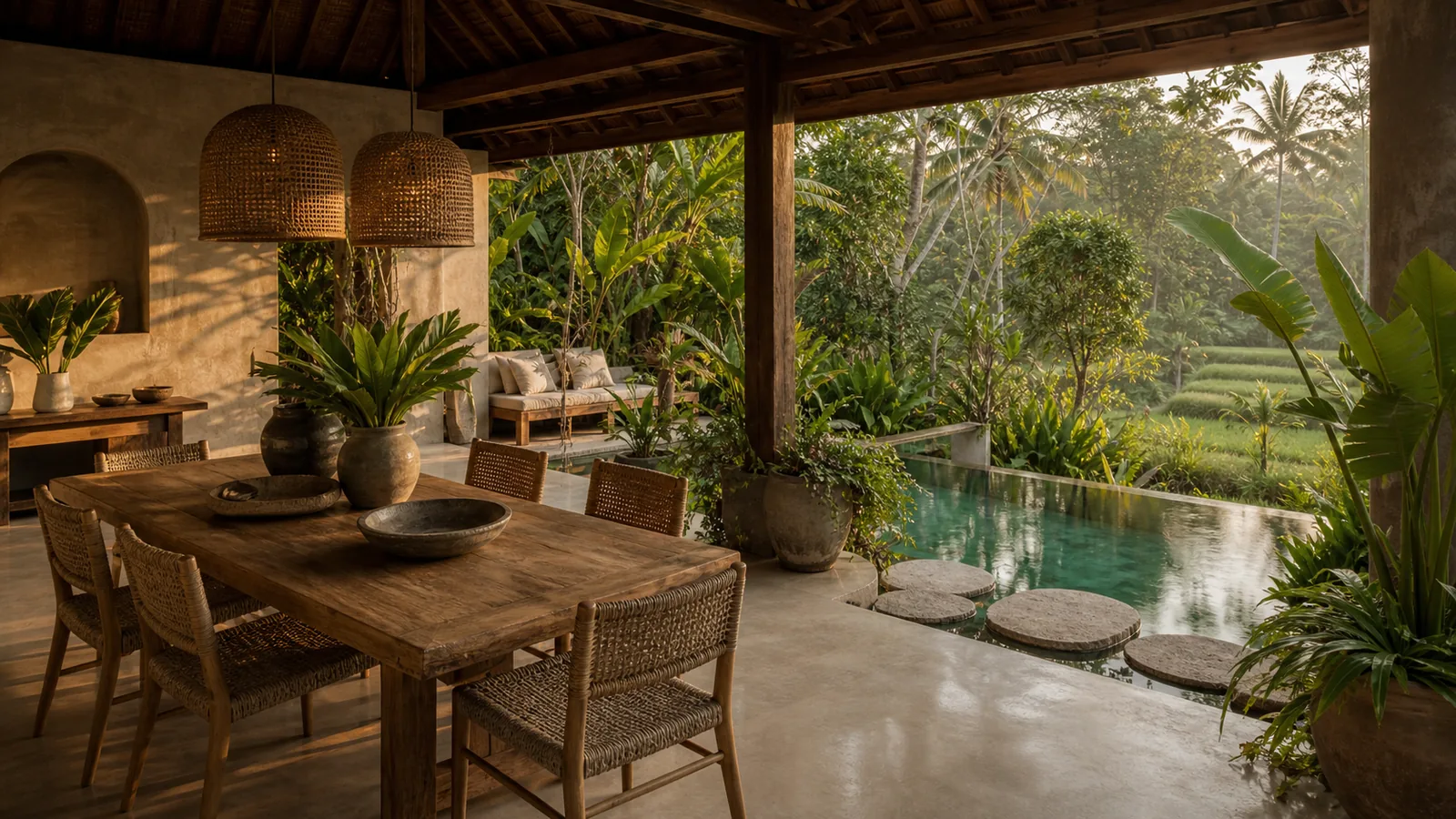
Ubud real estate content tends to do one of two things: sell lifestyle or show inventory. The gap between the two — the operational and legal layer that determines whether a property you love on screen is viable for the way you intend to use and own it — is what most pages skip entirely.
Here is what most guides do not address before you start contacting agents:
Access and road conditions. Ubud’s most scenic pockets — Kedewatan, Sayan, Payangan, Tegallalang — involve steep, narrow lanes that become difficult in the rainy season. A 10-minute Google Maps estimate can take 30 minutes in wet conditions. If you plan to host guests or run retreat weeks, road access is a primary logistics variable, not a scenic backdrop.
Slope, drainage, and humidity. Jungle settings come with year-round humidity and significant rainfall. Properties on steep slopes face drainage risk; poorly ventilated structures develop damp that damages finishes, furniture, and electrical systems. Maintenance costs in Ubud run measurably higher than comparable Canggu or Seminyak properties for this reason alone.
Retreat-use licensing. Buyers planning to run yoga retreats, wellness programs, or boutique accommodation need permits that go beyond a standard villa rental license. An IMB or SLF issued for a residential villa does not automatically permit commercial retreat operations. This is not a technicality — it affects insurability, guest safety liability, and resale positioning.
Lease decay and ownership term. Most foreign buyers access Ubud property through leasehold or company structures. A 25-year lease that looks affordable now may have 12 years remaining after you factor in title transfer timelines and extension negotiations. Every year of remaining term affects resale value and your exit options.
Exit liquidity. Ubud has a smaller and more specialist buyer pool than Seminyak or Canggu. A property optimised for retreat use appeals to a narrower buyer set at resale. That is not a reason to avoid Ubud — it is a reason to enter with clear expectations about holding period and exit conditions.
Ubud Area Pockets: Where You Buy Matters More Than Square Footage
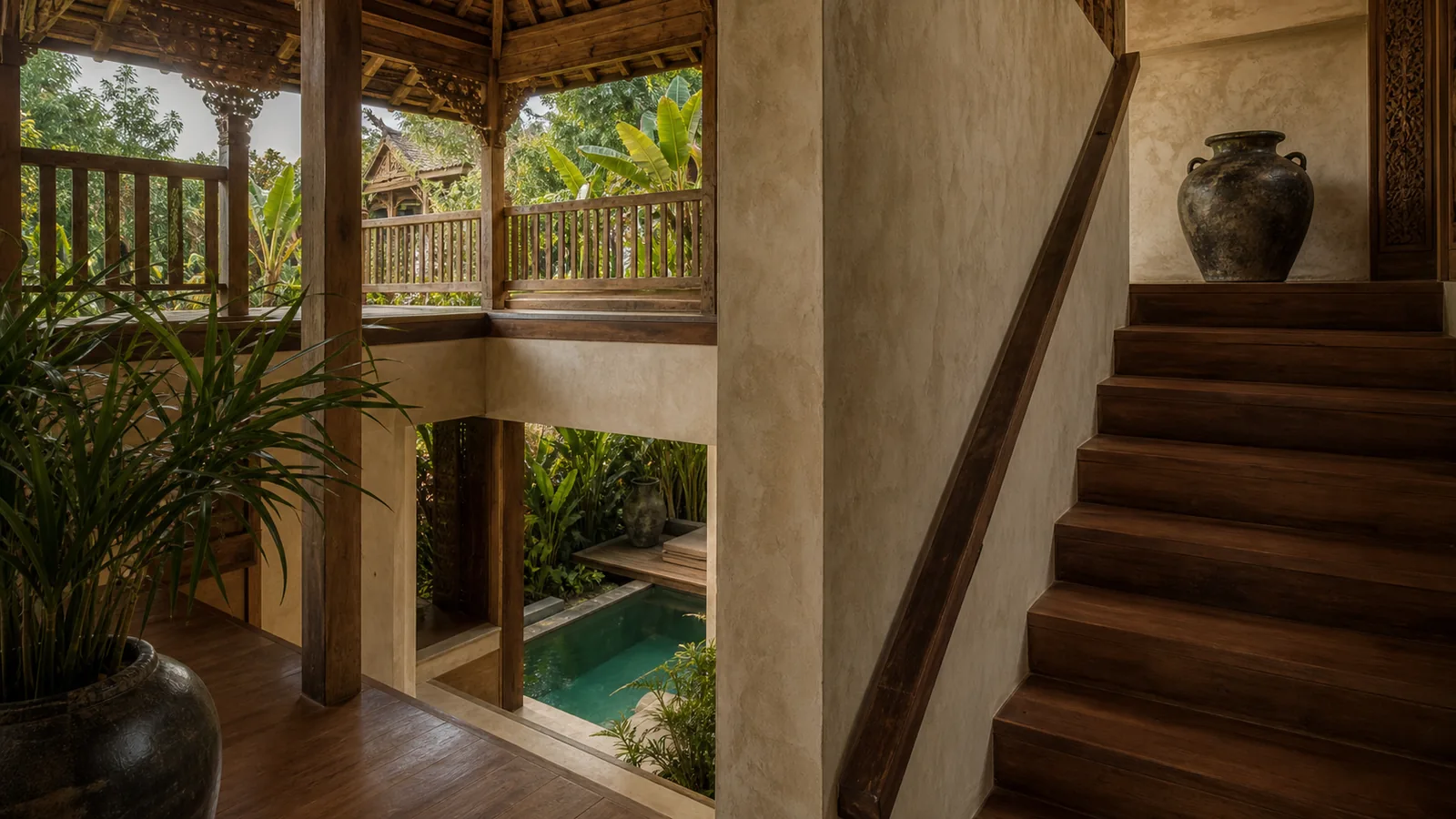
“Ubud” covers significant geographic range. Central town differs meaningfully from the river gorge properties in Sayan or the agricultural highlands toward Payangan. Match the pocket to your use case before shortlisting individual properties — changing areas mid-search wastes significant due diligence time.
| Area | Setting | Access | Best fit | Key trade-off |
|---|---|---|---|---|
| Central Ubud / Monkey Forest Road | Walkable town core | Easy, paved | Long-stay lifestyle, short-term rental | Road noise, smaller plots |
| Sayan / Kedewatan | River gorge, dramatic views | Steep ridge roads | Boutique retreat, high-value rental | Complex logistics, premium pricing |
| Tegallalang | Rice terrace, mid-highland | Mostly paved, some narrow lanes | Wellness retreat, photography-driven rental | Thinner resale buyer pool |
| Payangan | Rural highland, quiet | Mixed; some unsealed roads | Privacy over footfall | Limited amenities, longest exit horizon |
Ownership Routes for Foreign Buyers Considering Ubud Villas for Sale
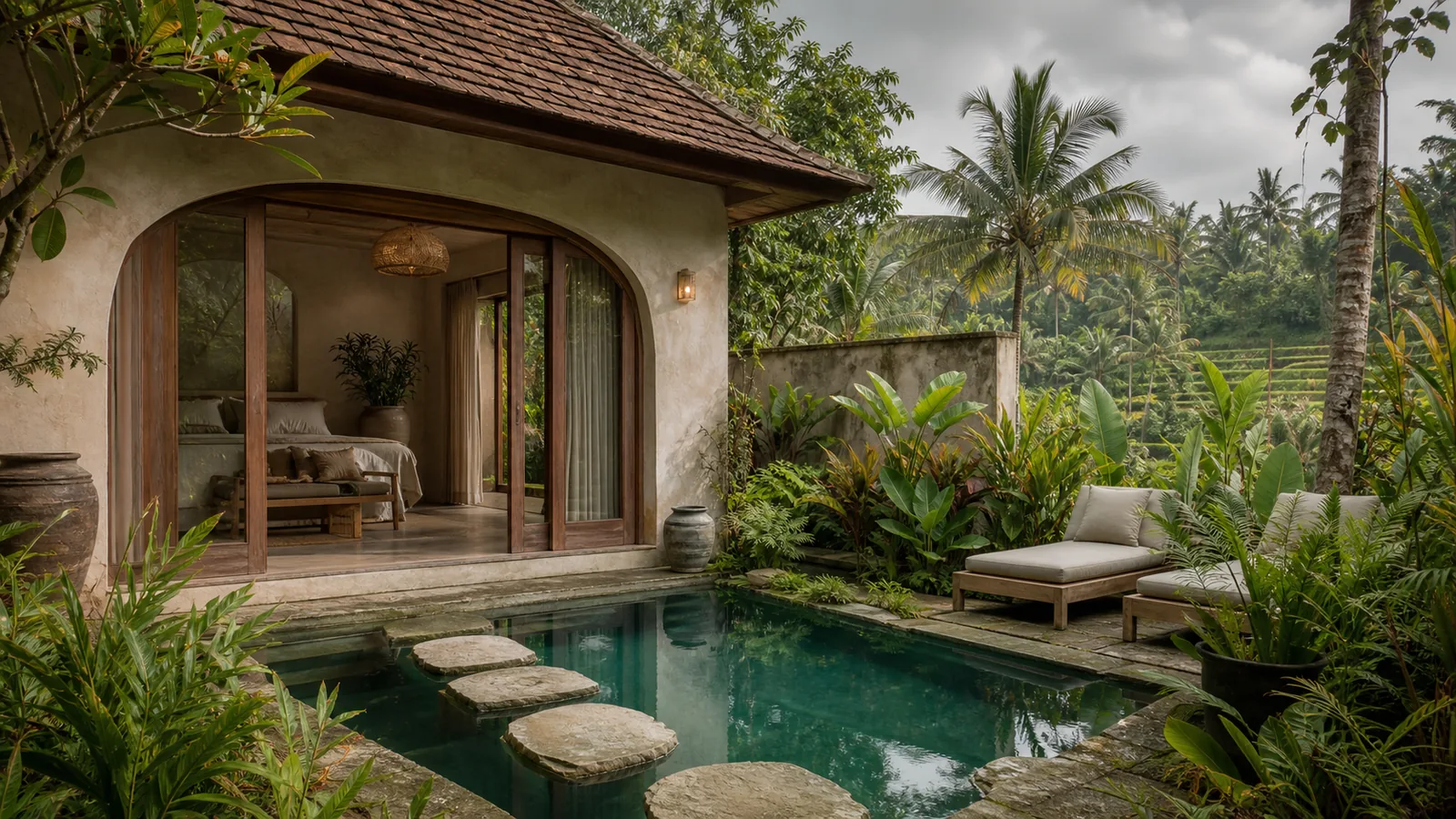
Foreign nationals cannot hold freehold (Hak Milik) title in Indonesia directly. The two routes most commonly used in Ubud property transactions are:
Leasehold (Hak Sewa). A direct lease agreement between the buyer and the landowner, typically structured for 25–30 years with optional extension clauses. The lease is your primary instrument — its terms, extension rights, and any sub-lease provisions must be reviewed by an independent notary before signing. See our leasehold vs freehold Bali guide for a detailed comparison of structure, risk, and exit conditions.
PT PMA or nominee structure. Some buyers establish a foreign-eligible Indonesian company (PT PMA) to hold property rights, or use individual nominee arrangements. Both carry ongoing legal compliance requirements. These are structural options for your legal advisor to assess — not recommendations from this page.
Neither route is inherently safer. Both require due diligence on the underlying land certificate, any existing encumbrances, and the seller’s authority to transfer.

Verification Checklist Before Viewing
Before a viewing is worth scheduling, a buyer’s desk should confirm the following. These are the questions we ask on your behalf:
- Certificate type and holder: Is the land certificate Hak Milik, Hak Guna Bangunan, or Hak Pakai? Who holds it, and is that entity in good standing?
- IMB / PBG and SLF status: Does the building have a current function certificate matching its intended use — residential or commercial accommodation?
- Remaining lease term: How many years remain? Is the extension clause bilateral or at the landowner’s discretion?
- Price freshness: When was the listing price last updated? Stale pricing creates misaligned expectations at offer stage.
- Vehicle access: Can a standard sedan reach the property gate without reversing on a ridge road? Can a minibus deliver retreat guests?
- Drainage and slope evidence: Is there visible water ingress, retaining wall cracking, terrace erosion, or interior damp staining?
- Staffing costs: If the property is currently operational, what is the confirmed monthly staffing cost, and can staff be retained post-purchase?
- Retreat or accommodation license: Has one been obtained, by whom, and is it transferable to a new owner?
- Duplicate listing check: Is the same property listed across multiple agencies at different prices? Duplicate listings often signal a stale or contested sale.
The Bali villa due diligence guide provides a structured walkthrough of what a pre-purchase title review should cover.
Yield Assumptions in Ubud: What to Stress-Test
Ubud operates on a different demand profile than the southern beach resorts. Long-stay demand from wellness travellers and remote workers is meaningful, but walk-in occupancy is lower than Seminyak or Canggu, and peak periods cluster differently. Sources such as Bali Tecture and Invest Land Bali publish villa yield ranges for Bali generally; Ubud-specific figures tend to sit at the lower end of the gross range, with higher staffing and maintenance costs compressing net returns further.
If a seller or agent presents a contractual yield promise or operator promise, verify the counterparty, the duration, and the underlying occupancy assumptions independently. Our Bali property investment page covers how to stress-test yield assumptions and what to ask before accepting any income projection.
Frequently Asked Questions
I’ve found a property with 20 years left on the lease — is that enough?
For a lifestyle buyer unlikely to resell, it may be. For an investment buyer, a sub-20-year lease materially narrows the resale market, because most buyers want a minimum of 15–20 years remaining when they acquire. Factor in the time needed to negotiate and execute any extension before committing.
The agent says the retreat license is easy to get after purchase — is that true?
Retreat and boutique accommodation licensing requires government applications, compliance with zoning rules (including whether land is classified agricultural), and in some cases community consultation. “Easy to get” is not a legal standard. Ask for written confirmation of the current license status before exchanging on any property where commercial use is central to your plan. Bali Real Estate Consultants’ retreat overview covers retreat-use requirements in more detail.
The price per are looks low compared to Canggu — is Ubud undervalued?
Not necessarily. Lower per-are pricing in some Ubud pockets reflects thinner resale liquidity, access constraints, and a more seasonal rental market — not a valuation anomaly waiting to correct. A lower entry price is not a margin of safety if the exit pool is also smaller.
Can I assess the property remotely before flying in?
Video walkthroughs are offered by some agencies, but slope, drainage, access quality, and ambient noise cannot be assessed from a video. A trusted on-the-ground representative — buyer’s agent or independent inspector — adds disproportionate value for Ubud properties, where the gap between what a photo shows and what a site visit reveals tends to be large.
How do I know if an Ubud property is genuinely retreat-viable?
Beyond the license question: confirm guest vehicle access, proximity to Ubud town for resupply and airport transfers, existing staff with retreat operational experience, kitchen and infrastructure capacity for multi-day programs, and noise environment at multiple times of day. Our Ubud wellness retreat villas page covers retreat-use criteria in detail.
What due diligence should I do on an Ubud rental income claim?
Request actual booking records or platform data rather than projected occupancy figures. Cross-check the claimed nightly rate against current platform listings in the same pocket. Confirm whether the figure quoted is gross or net of management fees, platform commissions, cleaning, and maintenance. Then model the same income at 30% lower occupancy to assess downside tolerance.

Ubud Climate Baseline for Villa Owners
We analysed 2015–2025 hourly reanalysis for one representative Ubud inland reference grid point. It is an area-level ownership baseline—not a weather station at the property and not evidence of mould, corrosion, flooding or repair incidence.
| Measured or derived metric | Ubud inland reference baseline |
|---|---|
| Mean annual rainfall | 2,640 mm/year |
| Rainy days (≥1 mm) | 268.5 days/year |
| Average relative humidity | 87.3% |
| Hours at ≥85% humidity | 5,948 hours/year |
| Longest observed wet run | 107 consecutive days |
| Average 10 m wind speed | 6.9 km/h |
| Strong-wind days (≥30 km/h in any hour) | 0.0 days/year |
| Mean daily shortwave energy | 5.68 kWh/m²/day |
| Daily mean temperature variability (standard deviation) | 0.93°C |
| Mean daily temperature range | 4.87°C |
| Mean wet-bulb temperature (derived) | 24.0°C |
| Mean first-layer soil moisture | 0.231 m³/m³ |
| FAO-56 reference evapotranspiration (derived) | 1,487 mm/year |
| Rainiest months (mean monthly rainfall) | February (394 mm), January (387 mm), December (364 mm) |
| Rain Burden (relative 0–100) | 100 |
| Humidity Burden (relative 0–100) | 100 |
| Outdoor Maintenance Pressure (relative 0–100) | 70 |
| Seasonal Weather Stability (relative 0–100) | 7 |
Grid-resolution note
Used as an inland comparison point in production articles; it does not represent every Ubud hillside or valley.
How to use this in due diligence
- Inspect roof junctions, drainage routes, retaining conditions and shaded exterior surfaces for signs of persistent moisture.
- Review ventilation, bathroom extraction, AC condensate drainage and timber-finishing schedules; the dataset does not measure mould incidence.
- Budget garden, pool and exterior maintenance from the villa’s actual condition and service records, not from an Ubud label alone.
Source: Copernicus Climate Change Service (C3S) ERA5-Land, hourly reanalysis, 2015–2025, analysed in Asia/Makassar local time. Relative humidity, wet-bulb temperature and reference evapotranspiration are derived from the source variables using the documented methodology. Data: CC BY 4.0. See the climate data methodology for formulas, thresholds and limitations. Values are area-level model estimates, not measurements at a villa; relative indices compare five configured Bali location requests (four distinct populated grid cells), not engineering, insurance, cost or yield ratings.
A Realistic Summary
Ubud is a legitimate market for foreign buyers with the right use case and risk profile. The landscape is exceptional, the long-stay wellness demand segment has shown durability, and well-structured properties in established pockets do transact at sensible terms.
The buyers who regret Ubud purchases are almost always those who underweighted access, humidity, licensing, or lease terms relative to the visual appeal of the property. The buyers who do well entered with a defined area fit, verified ownership terms, and realistic hold-period expectations.
If you are comparing properties across Ubud sub-areas, assessing retreat-use viability, or working through ownership structure options, a verified shortlist built around your specific criteria — budget, area, use case, and ownership comfort — is more useful than a generic property search.
Get Ubud shortlist — tell us your budget, preferred Ubud pocket, and intended use, and we will filter against verified criteria before recommending viewings.
This page was written and reviewed by our buyer-side research team. Content is updated periodically to reflect regulatory and market changes in the Ubud area. It is provided for educational purposes only and does not constitute legal or financial advice. For property-specific guidance, consult an independent notary and a licensed Indonesian property lawyer.