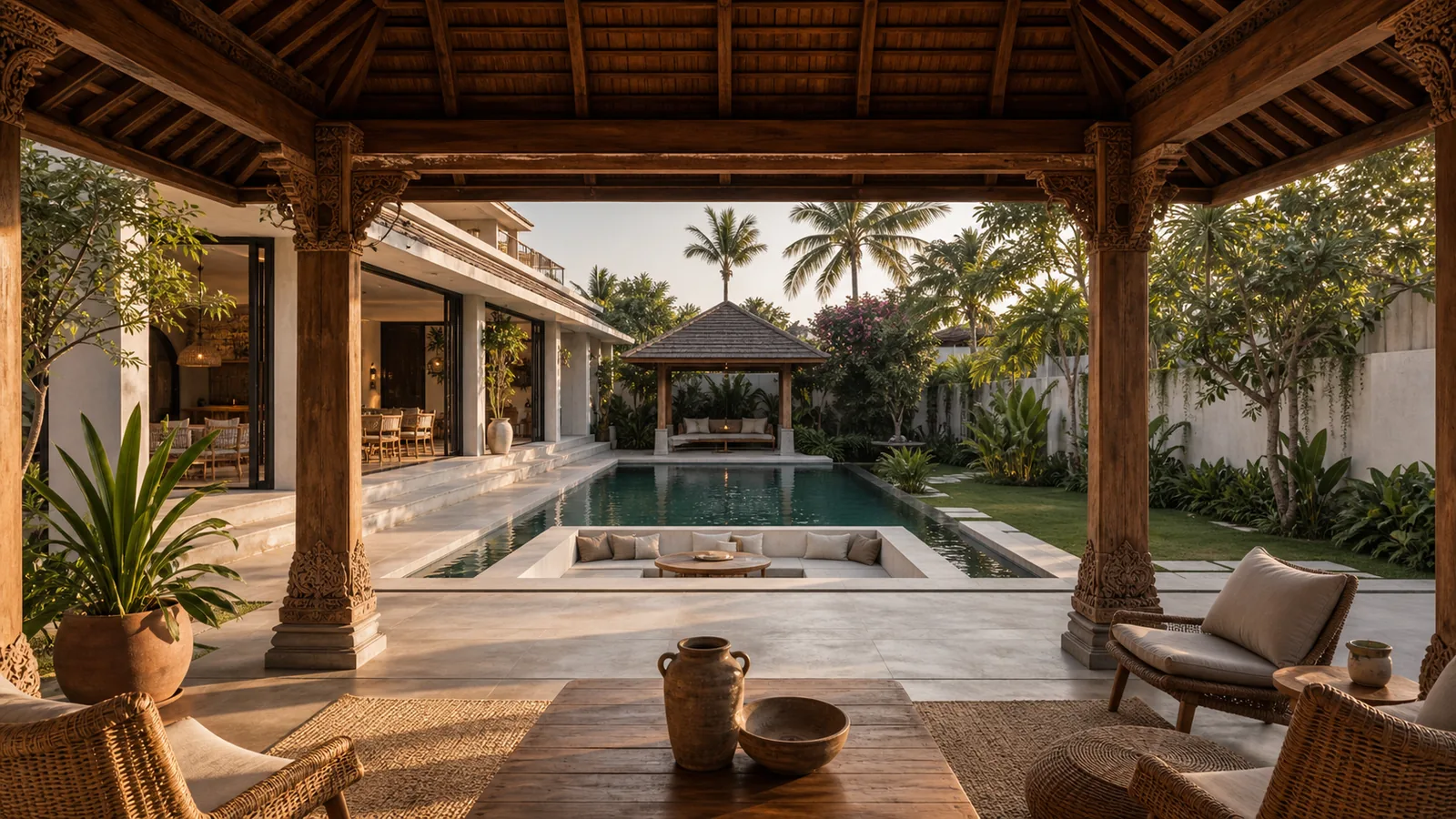
If your first question about a Canggu villa is “what yield does it produce?” — the honest answer is: that depends on five assumptions most listings never show you.
This page works through those assumptions: how gross and net canggu villa rental yield figures diverge, what subarea dynamics in Canggu and Berawa actually affect occupancy, what to confirm before viewing a single property, and what experienced buyers tend to ask before committing to a shortlist.
What this page is and is not: This is educational content to help buyers ask better questions. It is not financial advice, legal advice, or a live inventory of available properties.
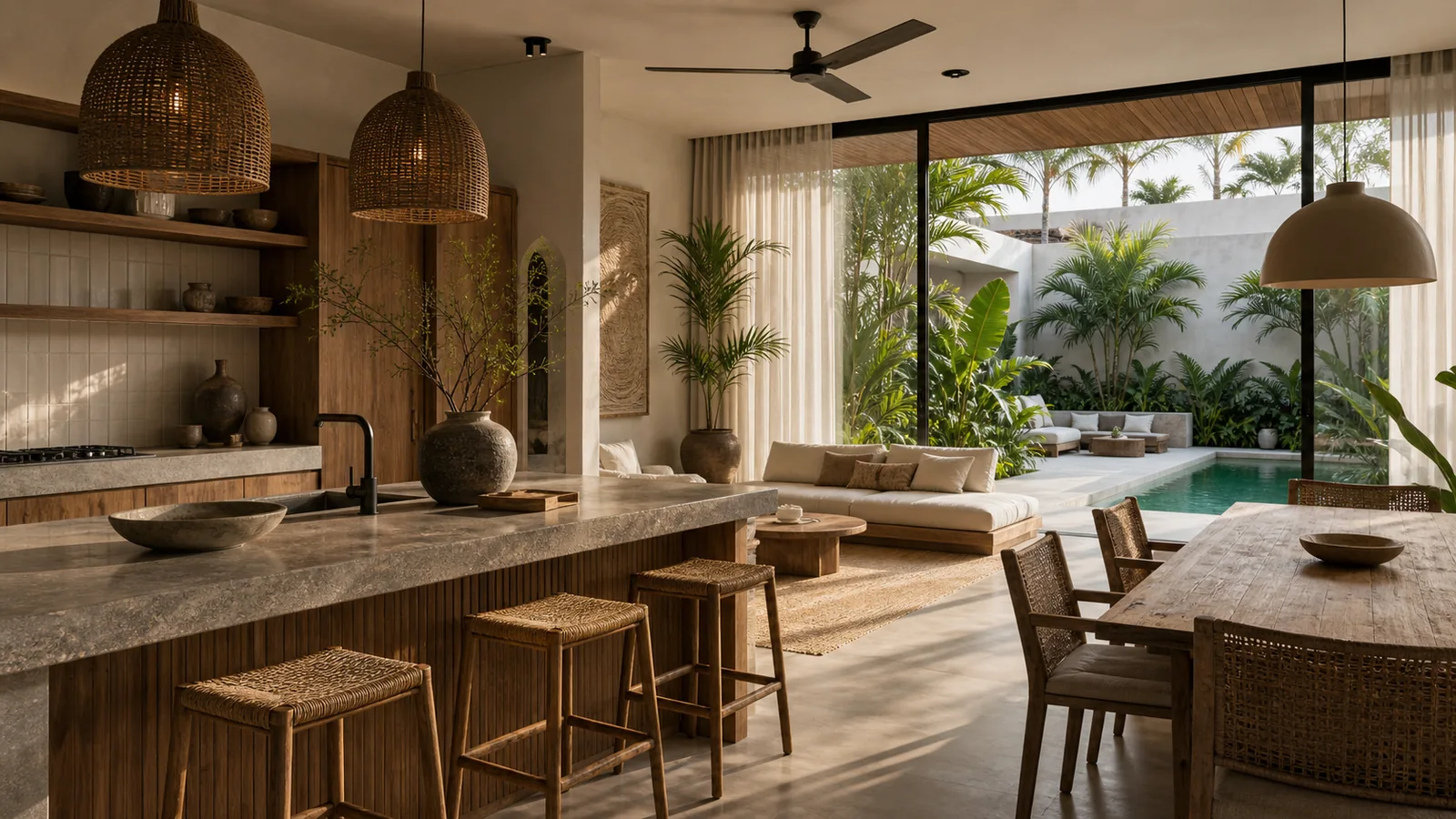
What Most Guides Miss
Most articles on canggu villa rental yield lead with a gross number — often cited in the 8–12% range — and stop there. The number is not invented: some villas, in peak conditions, have achieved it. But as a planning baseline, it misleads more buyers than it helps.
Here is what the headline typically omits:
The gross-to-net gap is large. Gross yield is annual rental revenue divided by purchase price. Net yield subtracts platform commission (15–25%), property management fees (10–20% of revenue), maintenance, local tax obligations, insurance, and any owner-use periods that reduce bookable nights. A villa projected at 10% gross can deliver 4–6% net under realistic operating assumptions. That gap is where investment cases are made or lost.
Duplicate listings are the norm, not the exception. The same villa commonly appears across multiple agencies with inconsistent pricing, availability, and lease-term claims. A buyer comparing five “options” may be comparing three versions of two properties — none of them confirmed available at the stated price.
Lease decay is a real cost. Most foreign buyers access Bali property through leasehold structures. A 25-year lease purchased today is a shorter, less liquid asset each year. The yield calculation changes depending on where you are in that timeline and whether the extension is documented or assumed.
Rental-use licensing varies. A villa needs the correct permits to be legally rented to tourists. Not all properties marketed as rental investments hold these; some operate in an informal zone that creates compliance exposure for the buyer. This is not legal advice — but it is a non-negotiable question before any offer. Villaaudit.com’s due-diligence guide covers the documentation to request.
Occupancy assumptions are often optimistic. A yield projection built on 80% annual occupancy in a market where comparable villas average 55–65% is a scenario, not a baseline. Conservative modelling should start below 65% for most Canggu tiers, based on available operator and platform data from Balitecture’s rental income analysis.
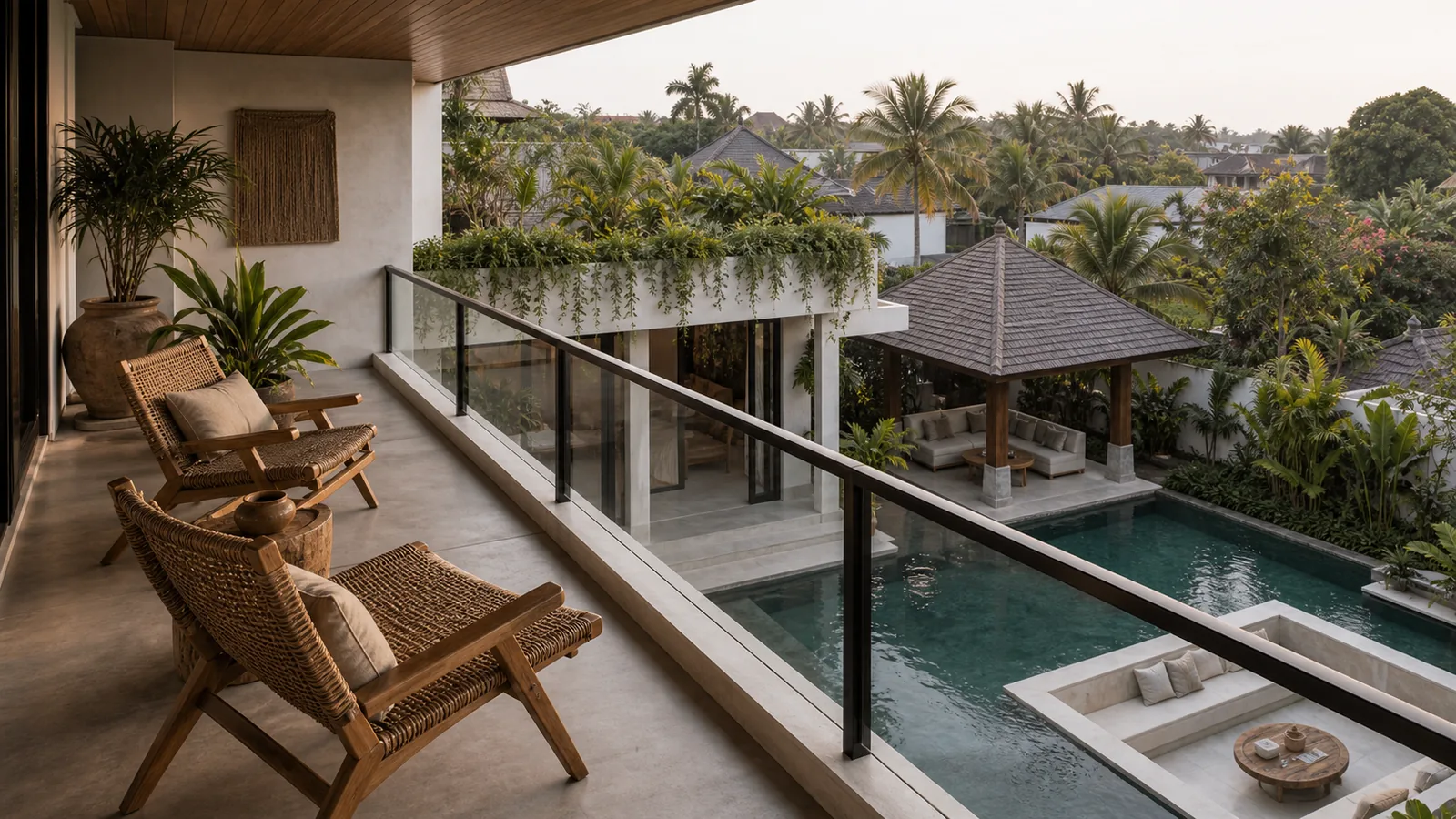
Canggu and Berawa: Subarea Fit Comes Before Yield Numbers
Canggu is not one market. Treating it as a single data point produces poor comparisons. The three main pockets have different buyer profiles, price points, and rental demand drivers:
| Subarea | Rental Demand Driver | Key Buyer Risk |
|---|---|---|
| Berawa | Beach club proximity, sea-facing premium, high nightly rates | High entry price, narrow lane access, severe peak-season traffic |
| Batu Bolong / Batu Mejan | Walkability, café density, digital nomad short stays | Venue noise, saturation, high management intensity |
| Echo Beach / Pererenan | Quieter setting, longer stay profiles, lower saturation | Thinner occupancy, fewer comparable benchmarks |
Berawa commands higher nightly rates and attracts larger budgets. The entry price matches. Lane access varies significantly — villas on narrow gang roads face logistics challenges that affect guest experience scores and repeat bookings.
Batu Bolong and Batu Mejan suit digital nomad and mid-range short-stay demand. Booking frequency is higher, but so is management intensity. Noise from neighbouring venues is a recurring theme in guest reviews.
Echo Beach and Pererenan offer lower saturation and a quieter setting — better for buyers who want a lifestyle-first hold with rental income as a secondary objective. Demand is real but thinner, so occupancy assumptions here need more scrutiny.
Before shortlisting any property, confirm which subarea you are actually comparing — and whether the occupancy projections in any yield estimate reflect that specific pocket, not Canggu broadly.
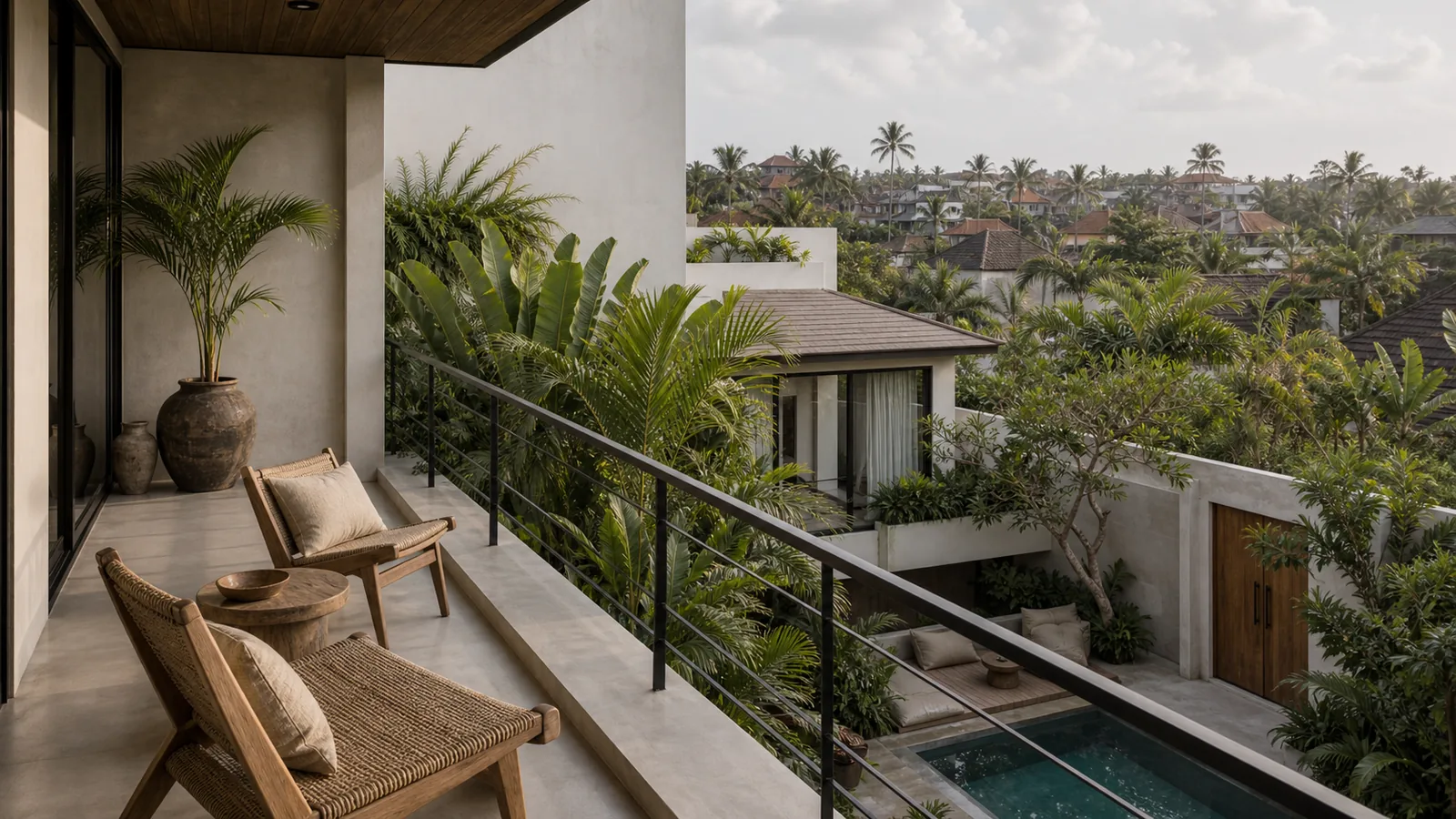
Ownership Structure: What Foreign Buyers Need to Know
Foreign nationals cannot hold freehold title (Hak Milik) in Indonesia. The main routes at this price point:
- Leasehold (Hak Sewa): Direct lease, typically 20–30 years, with extension options. The terms of extension — price, mechanism, timeline — vary and must be confirmed in the original agreement, not assumed.
- Right to Use (Hak Pakai): Available to foreign nationals under certain conditions; longer effective tenure than most leaseholds, but with its own eligibility constraints.
- PT PMA (foreign-owned company): A locally incorporated entity through which a foreign investor holds property. Comes with ongoing compliance obligations and costs that affect net yield.
Each structure affects how the property can be operated, transferred, or exited. Independent Indonesian legal counsel is not optional — it is the baseline for any credible purchase process.
See the Bali villa rental yield overview for how these structures compare across the island, and best areas to buy property in Bali for a broader area-fit analysis across Bali’s main buyer markets.
Climate Data as a Canggu Operating-Cost Input
We analysed 2015–2025 hourly reanalysis for one representative Canggu coastal corridor grid point. It is an area-level ownership baseline—not a weather station at the property and not evidence of mould, corrosion, flooding or repair incidence.
| Measured or derived metric | Canggu coastal corridor baseline |
|---|---|
| Mean annual rainfall | 1,662 mm/year |
| Rainy days (≥1 mm) | 245.7 days/year |
| Average relative humidity | 85.5% |
| Hours at ≥85% humidity | 4,968 hours/year |
| Longest observed wet run | 81 consecutive days |
| Average 10 m wind speed | 12.2 km/h |
| Strong-wind days (≥30 km/h in any hour) | 6.4 days/year |
| Mean daily shortwave energy | 5.71 kWh/m²/day |
| Daily mean temperature variability (standard deviation) | 0.97°C |
| Mean daily temperature range | 2.85°C |
| Mean wet-bulb temperature (derived) | 23.9°C |
| Mean first-layer soil moisture | 0.310 m³/m³ |
| FAO-56 reference evapotranspiration (derived) | 1,504 mm/year |
| Rainiest months (mean monthly rainfall) | November (251 mm), December (230 mm), January (230 mm) |
| Rain Burden (relative 0–100) | 12 |
| Humidity Burden (relative 0–100) | 75 |
| Outdoor Maintenance Pressure (relative 0–100) | 49 |
| Seasonal Weather Stability (relative 0–100) | 70 |
Grid-resolution note
One representative grid point is used for the corridor because the source resolution cannot support parcel- or micro-neighbourhood-level climate claims.
How to use this in due diligence
- Include recurring AC service, drainage clearing, exterior-finish care, pool balancing and landscape recovery in the operating budget.
- Stress-test a maintenance reserve against the villa’s age and condition instead of applying one percentage to every Canggu property.
- Keep weather exposure separate from occupancy and nightly-rate assumptions; this dataset is not a rental-demand forecast.
Source: Copernicus Climate Change Service (C3S) ERA5-Land, hourly reanalysis, 2015–2025, analysed in Asia/Makassar local time. Relative humidity, wet-bulb temperature and reference evapotranspiration are derived from the source variables using the documented methodology. Data: CC BY 4.0. See the climate data methodology for formulas, thresholds and limitations. Values are area-level model estimates, not measurements at a villa; relative indices compare five configured Bali location requests (four distinct populated grid cells), not engineering, insurance, cost or yield ratings.
What a Realistic Canggu Villa Rental Yield Actually Looks Like
These are illustrative ranges based on published operator and platform data — not guaranteed outcomes. Actual figures depend on the specific property, operator, platform mix, and market conditions at the time of operation.
| Cost Line | Typical Range |
|---|---|
| OTA platform commission | 15–25% of booking revenue |
| Property management fee | 10–20% of revenue |
| Maintenance and repairs (annual) | 2–5% of purchase price |
| Local tax obligations | Confirm with a licensed Indonesian tax advisor |
| Insurance and utilities | Property-specific |
| Indicative net yield (conservative model) | 4–7% under realistic operating assumptions |
A villa priced to deliver 9% gross that costs 4–5% of value annually to operate at 60% occupancy is a materially different investment case than the headline implies. Investlandbali’s rental yield data and Balitecture’s rental income breakdown both provide useful framing for conservative modelling.
On rental guarantee clauses: Some developers or operators offer a contractual yield promise or rental guarantee clause. Treat these with significant caution. They depend on occupancy and management performance that are not assured. Confirm what happens if the operator underperforms and whether any promise is backed by escrow or third-party security before giving it weight in your investment case.
Pre-Viewing Verification Checklist
Apply this before requesting a viewing — not after:
- Availability confirmed with the owner or owner-authorised agent, in writing?
- Same villa cross-checked across agencies to reconcile duplicate listings?
- Lease years remaining confirmed, with documented extension terms?
- Rental-use licence (TDUP or equivalent) verified as current?
- Lane access and road condition checked — width, gate setback, surface condition?
- Noise sources identified — nearby venues, main roads, planned construction?
- Management operator identified, with occupancy history on comparable properties?
- Yield projection broken into occupancy rate, average daily rate, and cost structure?
- Purchase price compared against recent comparable transactions, not asking prices only?
See the Canggu villas for sale page for how these filters are applied before presenting shortlists to buyers.
Objections Experienced Buyers Raise
Buyers who have done this before tend to raise the same concerns. Treat these as pre-viewing questions, not post-offer issues.
“The agent says it’s achieving 85% occupancy.” Ask for documented booking history from the platform (Airbnb, Booking.com, or channel manager export), not an agent summary. Occupancy claims without verifiable data are common.
“The lease has 22 years remaining — that’s plenty.” Twenty-two years feels long today. At the mid-point of a rental hold, you may have 10–12 years left on a lease that is harder to resell and attracts fewer buyers. Confirm the extension mechanism now, in the agreement.
“A management company is already in place.” Find out their track record on comparable properties, what the management agreement actually guarantees versus estimates, and whether you are locked in post-purchase.
“The price is below market.” In a market with known duplicate listings and inconsistent pricing, a below-market price warrants more diligence, not less. Confirm ownership title, encumbrances, and whether the discount is explained by lease remaining, access problems, or permit gaps.
Frequently Asked Questions
What is a realistic net yield for a Canggu villa? Under conservative assumptions — 55–65% occupancy, platform fees, management, maintenance, and tax included — most Canggu villas operate in the 4–7% net range. Higher gross projections exist but depend on assumptions that do not hold for every property or every season.
Can a foreigner own a villa in Canggu outright? No. Indonesian freehold title is not available to foreign nationals. The main routes are leasehold, Hak Pakai, or ownership through a PT PMA structure. Each has different cost, duration, and compliance implications. Independent Indonesian legal advice is essential before proceeding.
What lease length should I look for in a rental investment? Leases with fewer than 15 years remaining carry meaningful liquidity risk — harder to resell, fewer buyers, less runway to recover the investment. Confirm both the remaining term and the documented extension mechanism before shortlisting.
How do I verify a villa has the correct rental-use licence? Request the IMB (or PBG under current rules), operational business licence (TDUP or equivalent), and any environmental permits required for short-term rental use. A local notary or property lawyer can verify these against regional authority records. Villaaudit.com’s guide outlines the full documentation set.
Why does the same villa appear on multiple agencies at different prices? Most Bali agents operate on open-listing arrangements — the same property is simultaneously listed by multiple parties without exclusive agency. This creates inconsistent pricing, availability claims, and lease-term descriptions. Reconcile all active listings for a property before treating any single source as authoritative.
What Supports a Reliable Yield
Properties that tend to perform closest to projection share a recognisable pattern: clear lane access, a current rental-use licence, a management operator with documented occupancy history on comparable villas, a lease with at least 15 years remaining or a credible and documented extension mechanism, and a purchase price not inflated by broker layering or speculative pre-launch positioning.
None of those factors appear in a headline yield number. All of them are checkable before you view.
If you have a budget range, a preferred subarea within Canggu or Berawa, and a sense of whether this is a lifestyle hold, a pure rental investment, or a combination — a verified shortlist filtered against the criteria above is the logical next step.
Prepared by the Verified Bali Villas team and reviewed by an independent Bali property consultant. Updated periodically. This content is educational and does not constitute financial or legal advice. Verify all yield figures, legal structures, and property specifics with qualified local advisers before making any purchase decision.