Best Areas to Buy Property in Bali
Most people arrive at this question thinking it’s about location. It isn’t. It’s about which combination of lease term, ownership structure, operating costs, and exit liquidity actually works for your situation—and which area gives you the best shot at all four lining up.
This guide covers the best areas to buy property in Bali from a buyer’s perspective. No developer headlines. No contractual yield promise language taken at face value. Just the variables that determine whether a purchase makes sense once you look past the brochure.
What Most Guides Miss
Most area comparisons rank Bali neighborhoods by popularity, price per square meter, or listing volume. That framing helps agents fill pipelines. It doesn’t help buyers make decisions.
What actually determines whether an area works for you:
The ownership route available in that zone. Indonesia does not allow direct freehold ownership by foreigners. Your access depends on leasehold (Hak Sewa), a PT PMA company structure, or a right-to-use title (Hak Pakai)—and these vary by property, not just by area. The structure you can access limits what you own, for how long, and what you can do with it later.
Lease term remaining on existing stock. A 20-year lease at a good price and a new 30-year lease at a premium are fundamentally different assets. Both appear on the same listing pages. You need to know which you’re actually buying—and what that means for resale value as the term shortens.
Net yield after real operating costs. Gross rental yield figures—often quoted at 10–15% in Bali marketing—look different once you subtract management fees (typically 20–30% of revenue), maintenance reserves, utilities, ground lease payments, licensing compliance costs, and vacancy. InvestLandBali’s rental yield analysis and Rumavi’s 2025 ROI guide both document this gap in detail.
Exit liquidity. Bali’s resale market for leasehold villas is thin compared to its purchase market. Who your future buyer is, and what they can legally acquire, is worth establishing before you commit—not after you want to sell.
These factors vary significantly by area. The sections below use them as the actual comparison points.

Best Areas to Buy Property in Bali: Area-by-Area Breakdown
Canggu
Canggu is the most searched area for foreign buyers and carries the deepest pool of listed villas. The corridor from Seminyak Road north through Echo Beach and into Pererenan attracts lifestyle buyers and short-term rental investors in roughly equal measure.
What works: High tourist density supports strong occupancy for well-managed properties. Developer competition has pushed more projects to market with verified licenses and longer initial lease terms—partly to differentiate from older stock.
What to verify before moving forward:
- Zoning has tightened in parts of Canggu. Confirm the villa holds a valid Izin Mendirikan Bangunan (IMB/PBG) and the correct rental operating license (KBLI 55194 or equivalent) before any funds move.
- Saturation is measurable. As more villas enter the rental pool, occupancy for average-specification properties trends down. High-specification villas with strong management relationships perform better; generic mid-tier stock faces margin compression.
- Road congestion affects tourism appeal and personal use. Visit during peak season before committing if this is partly a lifestyle purchase.
Ubud
Ubud attracts a different buyer profile—typically someone combining genuine lifestyle interest with a longer hold view. Ubud villas achieve lower nightly rates than coastal areas, but sustain occupancy across wellness, retreat, and cultural tourism segments that behave differently from beach-resort guests.
What works: Less saturated than coastal areas for well-positioned properties. Land values have appreciated more steadily with less boom-and-correction volatility. Monthly and seasonal tenancies are common alongside nightly rentals, which can reduce management complexity.
What to verify:
- Some land around Ubud is classified as agricultural. Building permits and license compliance require careful review—zoning matters more here because enforcement has been inconsistent and is now receiving closer attention.
- Ubud is further from the airport, which limits certain guest segments and increases management logistics costs.
- Yield benchmarks from coastal areas don’t transfer. Run location-specific occupancy models against your target property.
Uluwatu and the Bukit Peninsula
The Bukit has seen the most dramatic developer activity of any area in recent years. Uluwatu villas and properties across Bingin, Padang Padang, and Balangan attract surf-focused and luxury travellers; per-night rates at the top of the market are among the highest in Bali.
What works: The guest profile skews toward higher per-night spend. Some developments have been structured with longer initial lease terms—25–30 years with documented renewal options—specifically to address buyer concern about lease decay.
What to verify:
- Water access on the Bukit is a genuine infrastructure issue. Some properties rely on water trucking, which adds recurring operating cost and introduces supply risk during peak periods. Confirm the water source and build the cost into your yield model.
- Access roads to many Bukit properties are narrow and steep, which affects guest profile and management logistics.
- Off-plan stock on the Bukit has increased sharply. Off-plan purchases carry developer completion risk. Verify the developer’s track record on completed projects before signing anything.
Rain, Humidity and Wind: Area-Level Comparison
We compared 2015–2025 hourly reanalysis at the representative Bali reference points below. The figures help screen maintenance exposure; they do not rank individual villas or replace drainage, material and building-condition checks.
| Reference point | Rainfall mm/year | Rainy days/year | Avg RH | ≥85% RH hours/year | Avg wind km/h | Strong-wind days/year† | Solar kWh/m²/day | Outdoor pressure* |
|---|---|---|---|---|---|---|---|---|
| Canggu coastal corridor | 1,662 | 245.7 | 85.5% | 4,968 | 12.2 | 6.4 | 5.71 | 49 |
| Ubud inland reference | 2,640 | 268.5 | 87.3% | 5,948 | 6.9 | 0.0 | 5.68 | 70 |
| Uluwatu and Pecatu reference | 1,630 | 261.6 | 80.2% | 1,944 | 14.4 | 31.5 | 5.69 | 29 |
| Sanur east-coast reference | 1,754 | 264.0 | 83.7% | 3,901 | 12.1 | 4.9 | 5.68 | 35 |
| Seminyak southwest-coast reference | 1,754 | 264.0 | 83.7% | 3,901 | 12.1 | 4.9 | 5.68 | 35 |
*Outdoor Maintenance Pressure is a relative index across five configured location requests, which resolve to four distinct populated grid cells. The raw weather metrics beside it remain the evidence. †A strong-wind day contains at least one hourly 10 m wind-speed value of 30 km/h or more; this is a comparison threshold, not a damage threshold.
Grid-resolution disclosures
- Uluwatu and Pecatu reference uses the nearest populated ERA5-Land cell at -8.8, 115.2 (13 km from the requested coordinate), so it is a broad-area proxy.
- Sanur east-coast reference and Seminyak southwest-coast reference resolve to the same populated land cell at -8.7, 115.2; identical values mean the grid cannot distinguish those requests, not that their parcel-level conditions are identical.
How to use this in due diligence
- Use the table as an area-level shortlist input alongside access, zoning, title, demand and build quality.
- Do not convert a lower relative score into a low-maintenance promise; parcel drainage, shade, materials and management still dominate the actual outcome.
- Request property-specific roof, AC, timber, pool, garden and drainage records before adjusting a maintenance budget.
Source: Copernicus Climate Change Service (C3S) ERA5-Land, hourly reanalysis, 2015–2025, analysed in Asia/Makassar local time. Relative humidity, wet-bulb temperature and reference evapotranspiration are derived from the source variables using the documented methodology. Data: CC BY 4.0. See the climate data methodology for formulas, thresholds and limitations. Values are area-level model estimates, not measurements at a villa; relative indices compare five configured Bali location requests (four distinct populated grid cells), not engineering, insurance, cost or yield ratings.
Yield Assumptions: Reading the Numbers Honestly
Headline yield figures in Bali marketing are almost always gross and assume optimistic occupancy. Balitecture’s villa rental income analysis and the Ayla Property ROI calculator both provide frameworks for stress-testing gross figures against realistic net ranges.
| Item | Optimistic | Conservative |
|---|---|---|
| Gross occupancy | 75–80% | 55–65% |
| Management fee | 20% of revenue | 25–30% of revenue |
| Maintenance reserve | 2–3% of value p.a. | 4–5% of value p.a. |
| Licensing and compliance | Minimal | Allow for renewal costs |
| Estimated net yield | 6–8% | 4–6% |
These are illustrative ranges, not projections for any specific property. Actual figures depend on the villa, management operator, location, specification, and market conditions at the time.
An operator promise or contractual yield promise from a developer is not the same as independently verified rental performance. Ask to see actual occupancy records from the property management company, not projected figures provided by the seller.
Common Buyer Questions—and What They Usually Signal
“The agent says 15% yield is achievable.” Ask for the assumptions. Gross or net? What occupancy rate? What management fee structure? Which comparable properties, verified by the management company rather than the developer? The gap between a credible model and a marketing figure is often where the real investment decision lives.
“The lease still has 20 years—that’s plenty of time.” Leasehold values decay as the term shortens, which compresses your resale price and narrows your buyer pool. If you paid a market price for 20 years remaining, think about what you’ll realistically sell for at year 10, 12, or 15.
“I’ve seen this villa listed by three different agents.” Common in Bali. It means no single agent has exclusive knowledge of actual availability, pricing, or ownership situation. Go direct to the landowner’s legal documentation and the property management company to verify current state.
“The developer said the licenses are all in order.” Confirm independently. The VillaAudit due diligence guide recommends verifying the IMB/PBG against the physical structure, confirming the rental operating license is current, and having a qualified Indonesian lawyer review the land title—not relying on seller-provided copies.
Pre-Shortlist Checklist
Work through these before engaging seriously with any property in any area:
- Total lease term remaining confirmed in writing; renewal clause reviewed by a lawyer
- IMB/PBG valid and matching the actual structure on site
- Rental operating license (KBLI 55194 or equivalent) current and in the correct entity name
- Land title verified: ownership chain, no encumbrances, correct holder
- Ownership structure for foreign buyers confirmed (PT PMA, leasehold, or other)
- Operating cost model built: ground lease, management fee, maintenance reserve, utilities, licensing
- Actual occupancy records from management company reviewed (not projected figures)
- Water source and infrastructure confirmed (especially critical on the Bukit)
- Exit path identified: who can legally buy this asset in 5–10 years, and at what likely value
- Developer track record checked if off-plan: completed projects, no unresolved disputes
FAQ
Can a foreign buyer own land outright in Bali? No. Indonesian law does not allow foreigners to hold freehold land title (Hak Milik) directly. Accessible routes include leasehold (Hak Sewa), a PT PMA company structure, and right-to-use title (Hak Pakai), each with different conditions. Nominee structures—where an Indonesian national holds title on behalf of a foreigner—carry legal risk and are not a recommended route. This is general education, not legal advice; consult a qualified Indonesian property lawyer for your specific situation.
Which area has the highest rental yield? Net yield after management fees, maintenance, licensing, and vacancy is what matters—not gross figures. No area reliably produces higher net yields across all properties. Individual property selection, management quality, and specification matter more than the area alone.
How long should a Bali villa lease be? Most buyers and advisors recommend a minimum of 25–30 years for a new purchase, with documented renewal options. Shorter remaining terms affect resale value and restrict your exit options. Always confirm in the legal documentation, not just the marketing materials.
What due diligence risk do buyers most often underestimate? License compliance. The IMB/PBG and rental operating license are both required for legal short-term rental operation. Properties operating without correct licensing carry regulatory risk that can affect occupancy and resale. Verify both independently before committing.
Is Bali property a good investment for foreigners? It depends entirely on the specific property, the ownership structure you can access, the verified operating performance, and your hold period. Pages that answer this question with a simple yes are not giving you the full picture. The better question is whether a specific property, in a specific area, with a specific lease structure, makes sense for your budget and timeline—and that requires working through the checklist above before drawing any conclusion.
Where to Focus Next
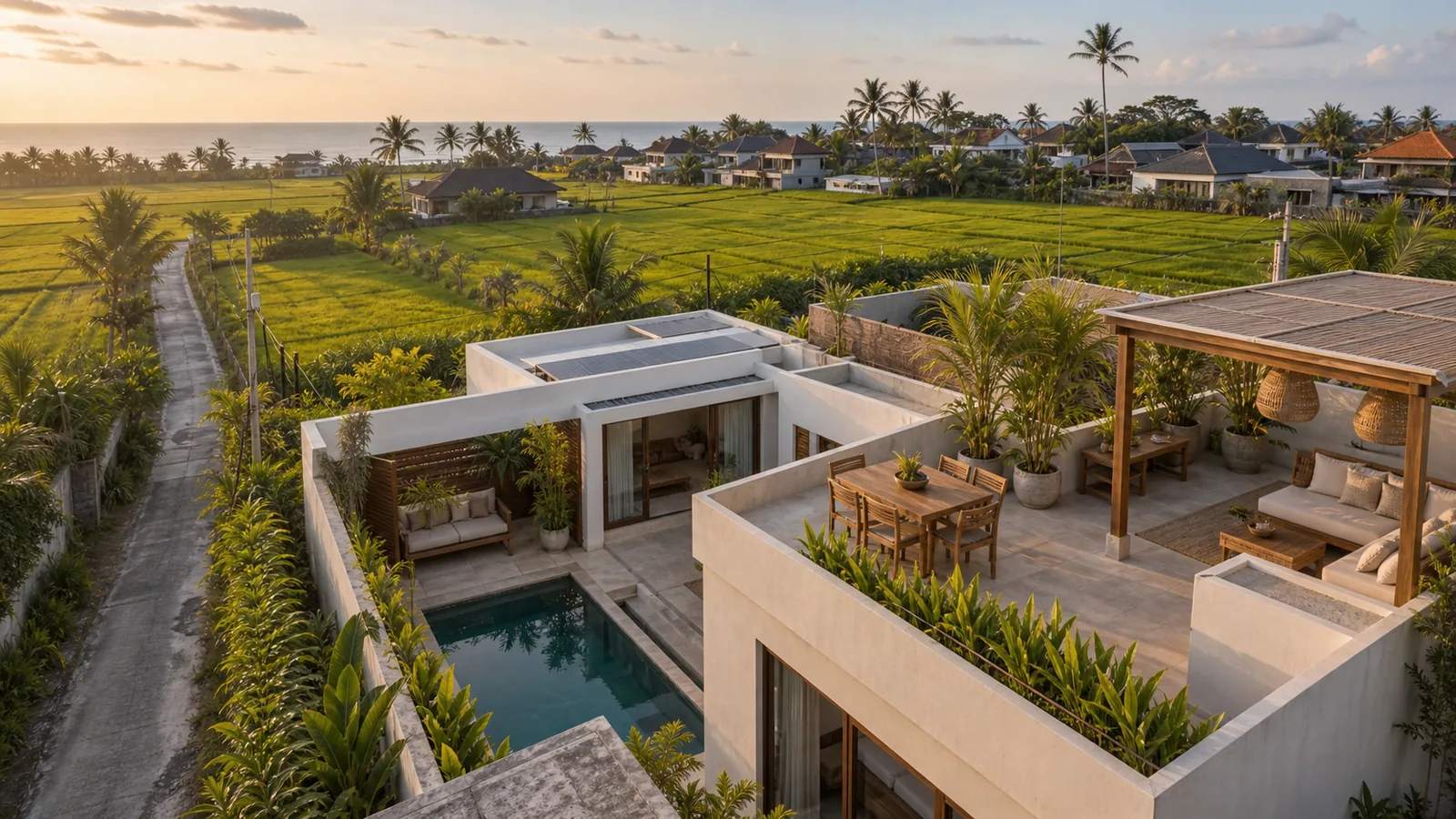
The best areas to buy property in Bali depend on your specific combination of budget, hold period, ownership comfort, and whether this is primarily an investment or a lifestyle asset with partial rental income.
Canggu suits buyers who want the deepest rental market and can compete on specification and management quality. Ubud suits buyers with longer horizons and a genuine interest in a different guest segment. Uluwatu suits buyers drawn to the premium coastal market who can verify infrastructure and developer credentials carefully before committing.
None of these is the universal right answer. All of them require the same discipline: verify the structure, verify the numbers, verify the licenses.
This article is produced by the Bali Villas Editorial Team and reviewed by independent Indonesian property counsel for legal and financial accuracy. It is intended as general education for prospective buyers. Nothing here constitutes legal advice, financial advice, or a representation of current listing availability. Consult a qualified Indonesian property lawyer and independent financial adviser before making any purchase decision.