Most buyers who lose money in Bali property markets did not miss an obvious scam. They missed a structural gap — a certificate issue disclosed too late, a nominee agreement without supporting documents, a tourism license that existed on paper but covered someone else’s operation.
This page covers the specific bali property scams and structural failure patterns that generate the most loss for foreign purchasers: which ownership structures fail and why, which documents to request and verify, and which responses from agents and sellers are material warning signs. Use it before you contact an agent, not after you have paid a deposit.
This is buyer education, not legal advice.
What Most Guides Miss
Most articles about bali property scams lead with the opportunity — yield projections, lifestyle upside, rising tourist numbers — and treat risk as a brief caveat near the end.
What those guides skip is operational detail: which specific documents to request, what a nominee arrangement actually means for your legal recourse when something goes wrong, and why the same villa can appear across four agents with four different lease end dates and four different asking prices.
The real problem is not that buyers are careless. It is that the information environment in Bali property is structurally fragmented. Notaries vary in diligence. Land certificates have been duplicated. Leasehold extensions have been executed without being registered at the land office. Agents are rarely lawyers, and lawyers are often not property-literate in the areas foreign buyers need most.
This page closes that gap — organized around the specific risks that generate the most loss.
Why These Red Flags Are Hard to Spot
Foreign buyers face a structural disadvantage from the start: Indonesian property law defaults to citizen ownership. Foreigners cannot hold freehold (hak milik) title directly. That legal constraint creates the conditions where unsafe deals thrive — buyers must rely on intermediary structures (nominee arrangements, PT PMA companies, or long leasehold) that each carry their own failure modes.
Many buyers enter the Bali market without understanding which ownership route they are actually using, or whether the structure they have been offered has been properly documented. Understanding the legal landscape is not paranoia. It is knowing why certain deal structures exist — so you can assess whether the specific version being offered to you has been done correctly.
For a full breakdown of which structures are available to you as a foreigner, see whether foreigners can buy property in Bali.
Risk Matrix: Three Categories of Unsafe Property Deals in Bali
| Risk Category | What Can Go Wrong | Worst-Case Outcome |
|---|---|---|
| Nominee agreement done incorrectly | Nominee reclaims property; no enforceable recourse | Full loss of purchase price |
| Certificate or title problem | Disputed ownership; court freeze; unregistered extensions | Unable to sell, rent, or extend |
| Licensing gap | Villa unrentable legally; fines; operating shutdown | Revenue model collapses post-purchase |
1. Nominee Agreements Done Incorrectly
A nominee agreement places property in the name of an Indonesian citizen on behalf of a foreign buyer. When executed through a reputable law firm with proper supporting documentation — a loan agreement, power of attorney, and right-of-use clauses — it provides a degree of protection. When done informally, it provides almost none.
Indonesian courts have ruled that nominee arrangements designed to circumvent foreign ownership rules can be declared void. Leasehold and PT PMA structures carry different legal standing and should be compared against your specific situation before choosing a route.
Red flags to watch for:
- The agreement is verbal or a single-page document without notarization
- The nominee was introduced by the agent — not a vetted, independent party
- No accompanying loan agreement or collateral clause exists
- The lawyer drafting the agreement also represents the seller or agent
- You are not given copies of every document with official wet stamps (cap basah)
If someone tells you “everyone does it this way,” that is social proof for a risk you are absorbing entirely on your own — not due diligence.
2. Certificate and Title Problems
Land certificates in Bali can carry layered problems: contested inheritance chains, certificates issued on disputed land, or leasehold terms extended without the extension being registered at the National Land Agency (BPN).
Leasehold versus freehold distinctions matter significantly at exit: a lease registered at BPN is transferable; one that exists only in a private contract may not be.
Red flags on title:
- The agent cannot produce a current BPN-certified land certificate (sertifikat tanah)
- The lease end date on marketing materials does not match the certificate
- The seller is a third party, not the original landowner named on the certificate
- The certificate is a photocopy; the original is “with the bank” or “at the notary”
- You are not offered a formal BPN land check (pengecekan) before paying a deposit
3. Licensing Gaps That Affect Villa Operation
A villa may be legally controlled — and still be unrentable. Short-term villa rentals in Bali require a Pondok Wisata or equivalent tourism license. Commercial operations require appropriate zoning. Many villas are built on residential hak milik land where commercial rental is not permitted.
Red flags on licensing:
- The agent confirms years of rental history but cannot show a current, named tourism license
- The building permit (IMB/PBG) does not match the actual built footprint or structure
- The villa sits on green-zone (sawah) land with agricultural protection status
- Rental income projections are provided with no reference to licensing status or zoning
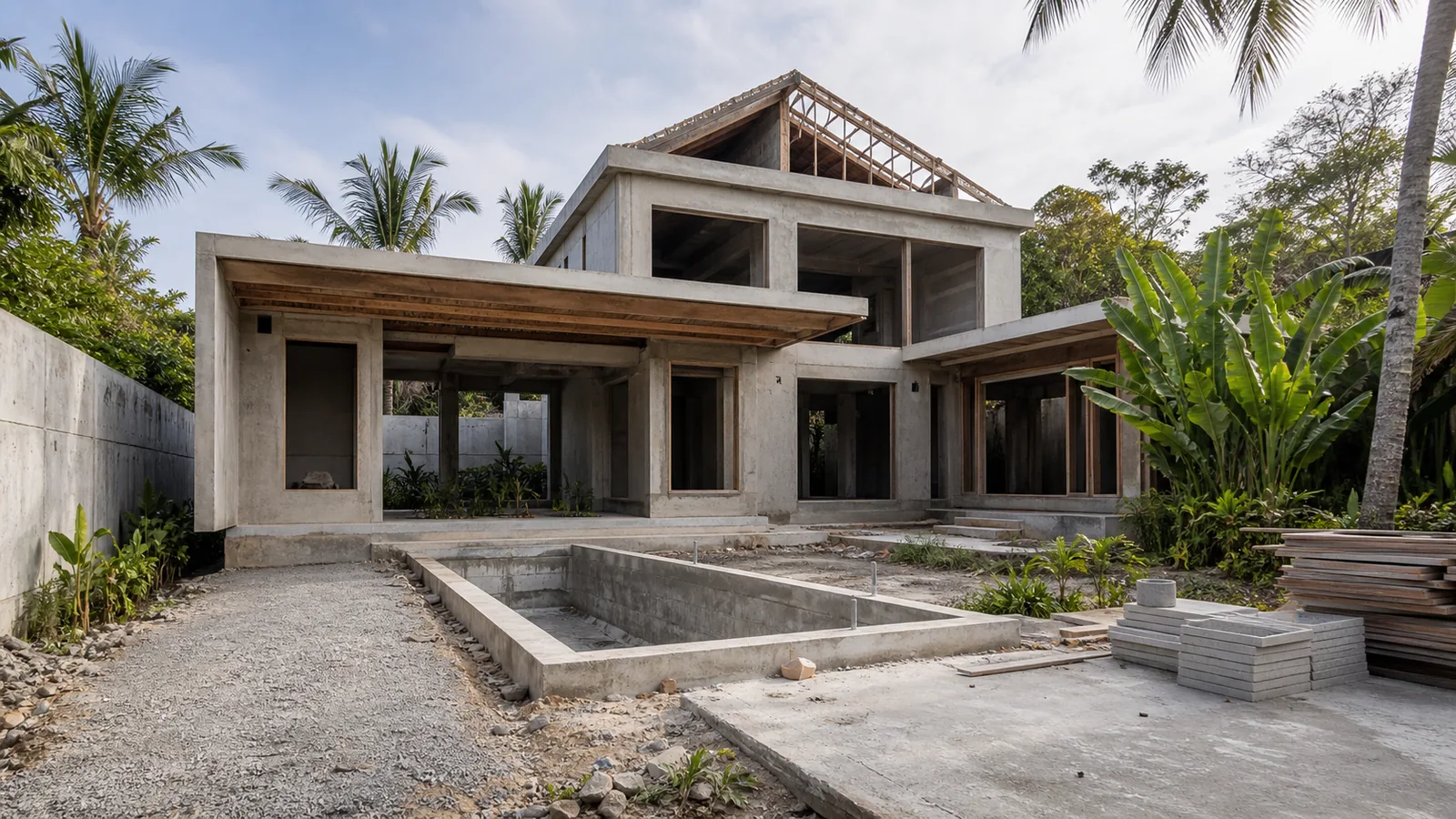
Common Responses to Expect — and What They Signal
These are responses buyers frequently hear when they push back on due diligence. Each one is worth examining closely.
“The lawyer is the same one everyone uses here.” Conflict of interest, not reassurance. Your lawyer should have no financial relationship with the agent, developer, or seller.
“We need the deposit to hold the villa while you do your checks.” Legitimate sellers hold properties for buyers who are demonstrably serious. A deposit before documentation review eliminates your leverage.
“The certificate issue will be sorted out before closing.” Unresolved title issues that are “being fixed” often remain unresolved at closing — or are disclosed as minor when they are not. Require resolution before, not after, deposit.
“Foreigners have been buying here this way for twenty years.” Duration is not legality. Indonesian courts have voided long-standing informal arrangements when nominees or heirs later contested them.
“Regulations are changing and this window won’t last.” The Omnibus Law did adjust some foreign ownership thresholds, but implementation varies by region and property type. Any claim that a specific deal is time-sensitive due to regulatory change deserves independent legal verification, not urgency-driven action.
Seven Questions to Ask Before Paying Anything
These are not adversarial. They are baseline due diligence that any professional seller, developer, or agent should welcome without hesitation.
- Can I see the original land certificate and verify it directly at the BPN office?
- Who is the current legal title holder, and what is their relationship to the selling party?
- Is there a building permit (IMB/PBG) that matches the actual structure?
- What is the tourism or rental license, and when does it expire?
- If this is a leasehold, what are the extension terms in writing — and have all previous extensions been registered at BPN?
- Who drafted the purchase agreement, and can I use my own independent notary to review it?
- Are there any active disputes, mortgages, encumbrances, or liens on this land?
If any of these questions produce evasion, urgency pressure, or a request for deposit before answers are provided, treat that as a material red flag.
Buyer Checklist Before You Proceed
Work through this list before authorizing any payment or signing any document.
- Confirmed which legal ownership structure is available to you as a foreigner
- Identified an independent Indonesian property lawyer (no referral relationship with your agent)
- Requested original land certificate for BPN verification — in person if possible
- Confirmed building permit (IMB/PBG) matches actual structure and use type
- Confirmed rental or tourism license exists, is current, and covers intended use
- Reviewed all lease extension terms and verified registration status at BPN
- Assessed nominee risk if that structure is being proposed, and reviewed all supporting documents
- Received written answers to all seven questions above before paying anything
- Confirmed zoning permits commercial short-term rental on this specific parcel
For a deeper version of this process, see the Bali property due diligence checklist and the full guide to buying property in Bali as a foreigner.
What This Page Cannot Confirm
This page is buyer education, not legal verification. It cannot:
- Confirm the legal status of any specific property, certificate, or title
- Advise whether a PT PMA or leasehold structure is appropriate for your situation
- Verify that any agent, notary, or developer operates legitimately
- Predict how regulatory changes will apply to a specific transaction
Before any purchase, engage an independent Indonesian property lawyer — one who receives no referral fees from agents or developers. Local legal review is not optional.
Frequently Asked Questions
Are nominee agreements legal in Bali? Nominee structures designed to circumvent foreign ownership rules exist in a legally contested space in Indonesia. Courts have voided some arrangements, particularly where they lack proper supporting documentation. Whether a specific structure offers meaningful protection depends on how it was drafted and by whom. Treat any nominee proposal as requiring independent legal review, not agent assurance.
What is the safest ownership structure for a foreign buyer? There is no universally safest structure — it depends on budget, intended use, and hold period. PT PMA offers stronger legal standing for commercial operations but carries incorporation costs and annual compliance obligations. Long leasehold registered at BPN is widely used for residential and villa investments. Each route has documented tradeoffs that require legal guidance specific to your situation.
How do I check if a Bali land certificate is genuine? Request the original certificate and take it to the relevant BPN office for a formal check (pengecekan). BPN can confirm whether the certificate number is registered, who the legal holder is, and whether any encumbrances or disputes are recorded. This should happen before any deposit is paid.
Can a villa with rental history be legally rented? Not automatically. Rental history on platforms does not confirm that a valid tourism license exists or that the property is correctly zoned for commercial short-term use. Ask to see the current Pondok Wisata or equivalent license, confirm it is issued in the correct name, and verify it has not expired.
What changed under Indonesia’s Omnibus Law for foreign buyers? The Omnibus Law modified some minimum property value thresholds for foreigners holding Hak Pakai (right-of-use) title. Implementation varies significantly by region and property type. The changes did not eliminate the freehold restriction for foreigners. Any claim that a specific deal benefits from Omnibus Law provisions should be verified with a local lawyer before acting.
What if I have already paid a deposit on a problematic deal? Stop further payments immediately. Engage an independent Indonesian property lawyer — not one introduced through your current agent or developer — and provide all documents you have signed. Do not sign anything further until you have independent legal advice. Your ability to recover funds depends heavily on what documentation exists and whether the agreement was notarized.
Climate Exposure in Property Due Diligence
We compared 2015–2025 hourly reanalysis at the representative Bali reference points below. The figures help screen maintenance exposure; they do not rank individual villas or replace drainage, material and building-condition checks.
| Reference point | Rainfall mm/year | Rainy days/year | Avg RH | ≥85% RH hours/year | Avg wind km/h | Strong-wind days/year† | Solar kWh/m²/day | Outdoor pressure* |
|---|---|---|---|---|---|---|---|---|
| Canggu coastal corridor | 1,662 | 245.7 | 85.5% | 4,968 | 12.2 | 6.4 | 5.71 | 49 |
| Ubud inland reference | 2,640 | 268.5 | 87.3% | 5,948 | 6.9 | 0.0 | 5.68 | 70 |
| Uluwatu and Pecatu reference | 1,630 | 261.6 | 80.2% | 1,944 | 14.4 | 31.5 | 5.69 | 29 |
| Sanur east-coast reference | 1,754 | 264.0 | 83.7% | 3,901 | 12.1 | 4.9 | 5.68 | 35 |
| Seminyak southwest-coast reference | 1,754 | 264.0 | 83.7% | 3,901 | 12.1 | 4.9 | 5.68 | 35 |
*Outdoor Maintenance Pressure is a relative index across five configured location requests, which resolve to four distinct populated grid cells. The raw weather metrics beside it remain the evidence. †A strong-wind day contains at least one hourly 10 m wind-speed value of 30 km/h or more; this is a comparison threshold, not a damage threshold.
Grid-resolution disclosures
- Uluwatu and Pecatu reference uses the nearest populated ERA5-Land cell at -8.8, 115.2 (13 km from the requested coordinate), so it is a broad-area proxy.
- Sanur east-coast reference and Seminyak southwest-coast reference resolve to the same populated land cell at -8.7, 115.2; identical values mean the grid cannot distinguish those requests, not that their parcel-level conditions are identical.
How to use this in due diligence
- Keep legal ownership verification separate from physical-condition verification: a valid structure does not establish that roofs, drainage, AC or exterior materials are fit for the site’s exposure.
- Define responsibility for weather-related inspection, routine maintenance and capital replacement in the lease, management agreement or handover documents where relevant.
- Use an independent property inspection and actual maintenance records; area-level reanalysis cannot prove damage, mould, flooding or compliance at a villa.
Source: Copernicus Climate Change Service (C3S) ERA5-Land, hourly reanalysis, 2015–2025, analysed in Asia/Makassar local time. Relative humidity, wet-bulb temperature and reference evapotranspiration are derived from the source variables using the documented methodology. Data: CC BY 4.0. See the climate data methodology for formulas, thresholds and limitations. Values are area-level model estimates, not measurements at a villa; relative indices compare five configured Bali location requests (four distinct populated grid cells), not engineering, insurance, cost or yield ratings.
Next Step
The buyers who lose money in Bali property markets are rarely the ones who asked too many questions. Working through this checklist before speaking to any agent or developer puts you in a position to qualify deals — not to be qualified by them.
This article is buyer education compiled from publicly available sources on Indonesian property law and Bali market practice. It does not constitute legal advice. Property law in Indonesia is subject to change and varies significantly by region, transaction type, and ownership structure. Before any purchase, obtain independent legal advice from a qualified Indonesian property lawyer with no referral relationship to your agent or developer. Content reviewed for factual accuracy against cited sources; last reviewed July 2026.